
KAFAGWISE Brings Baguio’s Higher Education Community Together to Advance Technopreneurship and Innovation
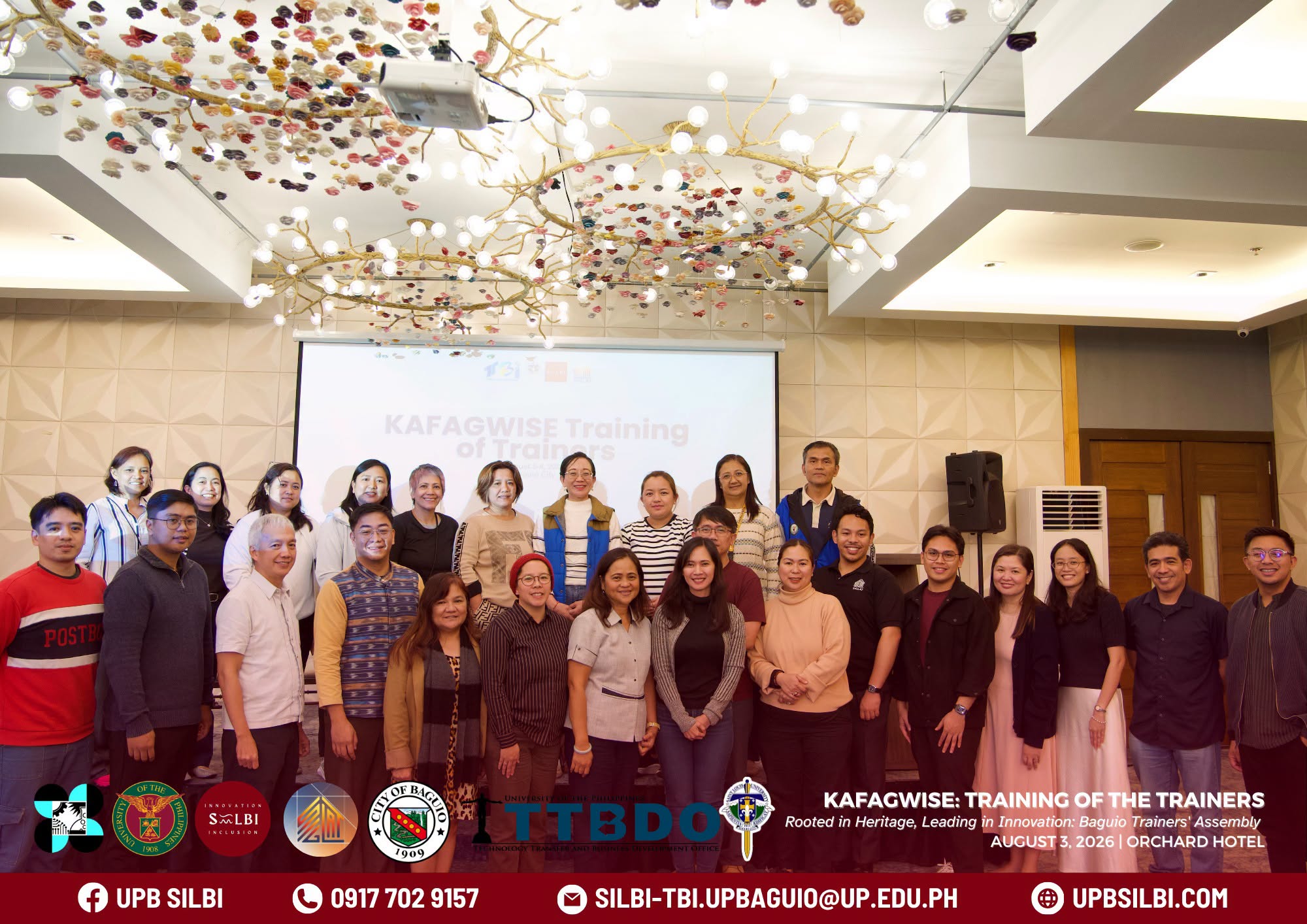
The KAFAGWISE Training of Trainers brought together educators, researchers, and innovation leaders from Baguio City and the Cordillera to strengthen their capacity in technopreneurship, technology transfer, venture development, and innovation facilitation. The two-day program highlighted the importance of collaboration in turning academic ideas and research outputs into validated, market-ready solutions.
 Featured Partner
Inv8 Studio
Innovation Partner for Startups & Growing Businesses
Building the Capacity to Turn Academic Ideas Into Impact
Universities are home to research, talent, and ideas with the potential to address real-world challenges. But moving these ideas from the classroom or laboratory into solutions that people can use requires more than technical expertise.
It requires educators and innovation facilitators who understand how to identify opportunities, validate ideas, develop ventures, and connect researchers with the right ecosystem partners.
This was the focus of the KAFAGWISE Training of Trainers, held on August 3–4, 2026, bringing together educators, researchers, innovation leaders, and representatives from higher education institutions across Baguio City and the Cordillera.
The program was organized by the University of the Philippines Technology Transfer and Business Development Office (UP TTBDO), in coordination with the City Planning, Development, and Sustainability Office (CPDSO) through the SIGLAT Youth Innovation Hub and Saint Louis University.

Connecting Institutions Around a Shared Innovation Agenda
The program opened with remarks from Ar. Donna R. Tabangin, Head of the City Planning, Development, and Sustainability Office, who emphasized the value of bringing institutions together to address Baguio’s challenges through research and innovation.
She also highlighted the city’s continuing vision of becoming a more livable, inclusive, and creative city.
This was followed by an inspirational message from former Councilor Levy Orcales, author of Ordinance No. 63, Series of 2023, which established the Innovation Alliance and Incubator Baguio.
Orcales emphasized the importance of meaningful partnerships and encouraged participants to recognize the people and institutions whose contributions help turn ideas into lasting impact.
The messages set the tone for KAFAGWISE’s central objective: strengthening collaboration among institutions so that research, innovation, and entrepreneurship can work together to create solutions for the city and the region.

From Opportunity Identification to Venture Development
Dr. Luis G. Sison, Director of the UP System Technology Transfer and Business Development Office, introduced the KAFAGWISE activities and the Technopreneurship Framework.
Participants then took part in a Fireside Chat and Reverse Pitch featuring former Councilor Orcales, Ar. Tabangin, and Dr. Roland M. Hipol.
The session surfaced real-world challenges and opportunities that universities, students, researchers, and innovators could potentially address.
The training then moved into practical sessions covering:
Opportunity identification
Technopreneurship 101 cases and current practices
Interdisciplinary team formation
Venture proposal development
Innovation curriculum mapping
Team matching
Participants worked through these activities and presented their initial outputs, allowing them to apply the concepts introduced throughout the training.
Incubator Baguio Highlights the Regional Innovation Pipeline
The Incubator Baguio team also participated in the two-day training, engaging with educators and innovation champions from across the region.
The team shared its ongoing work in building Baguio City’s startup and innovation ecosystem and highlighted the role of Incubator Baguio as a platform connecting researchers, founders, mentors, industry partners, investors, government, and support organizations.
The discussion also covered upcoming initiatives designed to create clearer pathways for researchers, innovators, and aspiring entrepreneurs to move from research and ideas toward real-world impact.
These include structured mentorship, startup support, ecosystem connections, innovation programs, and access to resources that can help promising ideas develop into sustainable ventures.
This approach reflects an increasingly important principle in regional innovation: research does not create impact simply by being produced. It needs pathways that connect it to users, markets, institutions, and communities.
Why Technopreneurship Matters to Universities
For universities, technopreneurship creates a bridge between academic research and entrepreneurship.
Students and researchers may develop technologies that address important problems, but without mechanisms for validation, commercialization, intellectual property support, mentorship, and industry engagement, many promising ideas can remain within academic institutions.
Training educators and innovation facilitators can help change this.
When faculty members and ecosystem practitioners understand how to identify opportunities, form interdisciplinary teams, develop venture proposals, and connect innovators with external partners, they can help create a stronger pipeline from research to innovation to entrepreneurship.
This can also give students greater exposure to entrepreneurial thinking and encourage them to see research not only as an academic requirement but as a potential starting point for solving real problems.
What This Means for Baguio and Northern Luzon’s Innovation Ecosystem
KAFAGWISE is significant because it brings together several institutions that form part of Baguio’s higher education and innovation landscape.
Representatives from SIGLAT, University of the Philippines Baguio, Saint Louis University, University of the Cordilleras, University of Baguio, and Benguet State University participated in the training, reflecting a shared commitment to strengthening collaboration across the ecosystem.
This kind of institutional alignment can become a major advantage for Baguio.
Instead of universities working independently on research, programs, and entrepreneurship, stronger connections can allow institutions to share expertise, identify complementary capabilities, form interdisciplinary teams, and connect promising technologies with external partners.
For the broader Cordillera region, the development of more capable innovation facilitators can also help strengthen the pipeline of technologies, startups, and solutions emerging from local institutions.
The long-term opportunity is to build an ecosystem where more research reaches the market, more innovators receive the support they need, and more ideas evolve into ventures that address local and national challenges.
KAFAGWISE demonstrates that building an innovation ecosystem is not only about creating startups. It is also about building the people and institutions capable of helping good ideas move forward.
When educators understand how to connect research with opportunity, and institutions work together to support that journey, universities can become stronger engines of innovation and entrepreneurship for Baguio and the Cordillera.
Original Source
Market Context
Universities are increasingly becoming important components of startup and innovation ecosystems because they provide access to research, talent, technology, and specialized expertise. However, translating these assets into economic and social impact requires technology transfer mechanisms, innovation facilitators, business incubation, industry partnerships, and entrepreneurial capacity. Training programs focused on technopreneurship can strengthen this pipeline by helping educators and ecosystem practitioners understand how research can be validated, commercialized, and developed into ventures. For Baguio and Northern Luzon, stronger collaboration among universities, government, industry, and innovation support organizations can help create a more connected regional pathway from research to innovation to entrepreneurship.
Are you a founder, innovator, or community builder in Northern Luzon?
We're always looking for compelling stories from the region's ecosystem. Whether you're launching a startup, running a program, or doing something interesting — we'd love to feature you.