
Baguio Is Opening Its Problems to Innovators—and That Could Change How Local Solutions Are Built
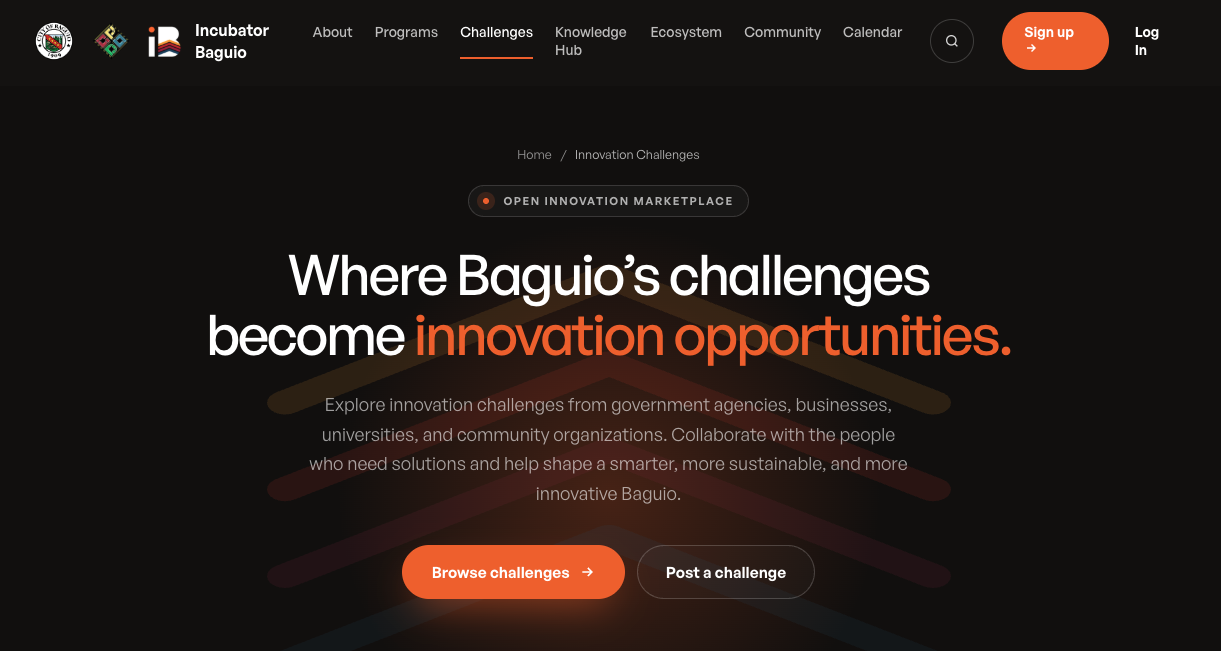
Instead of waiting for innovators to guess what communities need, Incubator Baguio is creating a platform where organizations can put real problems on the table and invite startups, researchers, students, and other innovators to respond. Its Open Innovation Challenges model offers a practical bridge between problems that need solving and people capable of building solutions.
 Featured Partner
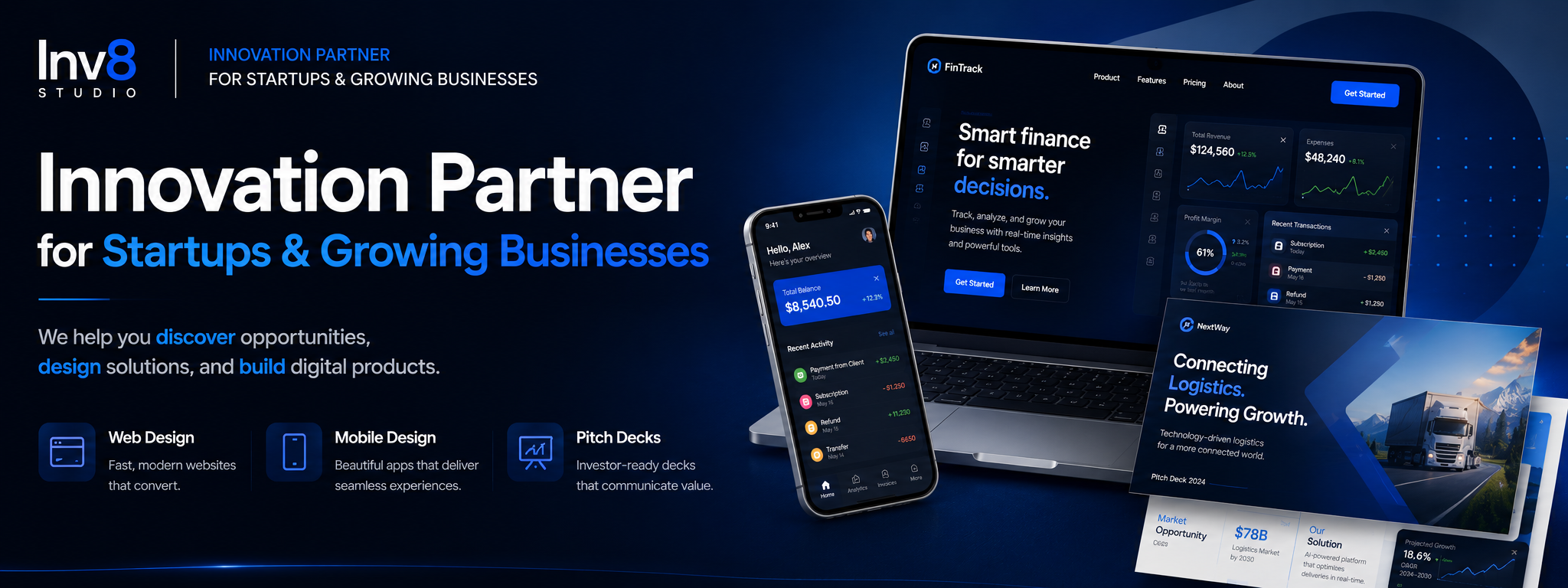
Inv8 Studio
Innovation Partner for Startups & Growing Businesses
Innovation often begins with an idea. But in many cases, the more difficult question comes first: What problem is actually worth solving?
Incubator Baguio is approaching that question from the other direction.
Through its Open Innovation Challenges, organizations can identify and publish real problems they need help addressing, while innovators can explore those problems and propose possible solutions. The model creates a more direct connection between the people experiencing a problem and those developing technologies, products, services, or new approaches to solve it.
Turning Problems Into Opportunities for Innovation
The concept behind the platform is straightforward.
An organization identifies a challenge. Instead of attempting to solve it entirely within its own walls, it opens the problem to a wider pool of talent.
Startups, researchers, students, and innovators can then study the challenge and develop proposals around it.
This approach gives organizations access to capabilities they may not have internally, while giving innovators something equally important: a real problem and a potential user to build for.
According to Incubator Baguio’s ecosystem development framework, selected challenges can potentially lead to collaboration between the problem owner and the innovators who respond, including mentoring, pilot testing, and further collaboration.
Incubator Baguio Ecosystem Development Framework.docx
That distinction matters for startups.
A startup does not necessarily need another hypothetical problem to solve. What it needs is evidence that a problem exists, people care about it, and a solution can potentially be tested in the real world.
From “Idea First” to “Problem First”
Much of entrepreneurship education begins with generating ideas. Open innovation reverses that sequence.
The challenge comes first. The solution comes later.
This makes the model particularly relevant to researchers and student innovators who may have technical capabilities but are still looking for a meaningful application for their work.
It also creates a possible pathway for organizations with operational or community problems that require expertise outside their existing capacity.
Incubator Baguio’s framework describes the platform as a way to connect problem owners with innovators, creating opportunities for real-world validation and eventual innovation adoption.
Incubator Baguio Ecosystem Development Framework.docx
In practical terms, the pathway can look like:
Problem → Challenge → Solution Proposal → Validation → Pilot → Adoption
Not every challenge will reach the final stages. But establishing the pathway makes it possible for promising ideas to move beyond presentations and prototypes.
A Different Role for Startups and Researchers
The challenges platform also expands how startups can participate in the city’s innovation ecosystem.
Instead of approaching organizations only to sell an existing product, innovators can respond to problems that organizations themselves have identified.
For researchers, this can create another route for translating research into practical applications. A research output may contain valuable knowledge, but connecting that knowledge to an actual user or operational need is often a separate challenge.
Incubator Baguio’s broader open innovation framework specifically emphasizes connecting research and innovation outputs with problem owners and supporting the translation from research findings into usable solutions.
That creates an important distinction: having technology is not the same as having a solution.
The solution emerges when technology, user needs, implementation conditions, and a viable pathway to adoption come together.
Why This Matters for Baguio’s Startup Ecosystem
Baguio already has a dense concentration of universities, researchers, students, creative talent, government institutions, and emerging innovators.
The challenge is not simply finding people with ideas. It is connecting those capabilities to problems where they can create measurable value.
This is where an open challenge platform can become useful.
For government offices, it can provide access to external ideas and technical capabilities.
For universities, it can create real-world applications for research and student projects.
For startups, it can provide opportunities for customer discovery, validation, pilot development, and potentially commercialization.
For communities, it can make local problems more visible to people capable of developing solutions.
That is consistent with Incubator Baguio’s broader Quadruple Helix approach, which brings together government, academia, industry, and community as participants in the innovation ecosystem.
The Challenge Is Only the Beginning
Publishing a problem does not automatically produce a successful innovation.
The quality of the challenge statement matters.
A useful challenge needs to explain the situation clearly, identify who is affected, establish what success could look like, and provide enough context for innovators to understand the problem. Incubator Baguio’s platform specifications include fields for the current situation, success criteria, resources available to solvers, priority areas, and other information that can help innovators respond meaningfully.
Just as important is what happens after a proposal is submitted.
The intended challenge lifecycle moves from submission and review to publication, shortlisting, proof-of-concept development, completion, and potentially adoption by the City.
That is where the model becomes more than an online idea board.
The real measure of an innovation challenge is not how many ideas it attracts, but whether good ideas can find a pathway toward testing and use.
An Invitation to Both Sides of the Ecosystem
The platform effectively creates two entry points.
Organizations can post problems worth solving. The available process allows an organization to provide information about its challenge and the support it can offer before submitting it for review and publication.
Innovators can look for problems worth building around.
That includes startups, researchers, students, and individual innovators who may have technical expertise, research, prototypes, or simply the motivation to work on a concrete local problem.
For Northern Luzon, this kind of mechanism is significant because it shifts innovation from being primarily idea-driven toward being more problem-driven.
And when a city becomes a place where real problems can be openly matched with research, technology, entrepreneurial talent, and experimentation, those problems can become starting points for something bigger: new products, new services, new partnerships, and potentially new ventures.
The challenge, ultimately, is not just to find an idea.
It is to find a problem important enough to build for—and create the conditions for the right people to build the answer.
Original Source
Incubator Baguio — Innovation Challenges
Market Context
Open innovation, GovTech, civic innovation, startup validation, research commercialization, and problem-driven entrepreneurship. For Baguio and Northern Luzon, challenge-based innovation can connect government and institutional needs with startups, researchers, students, MSMEs, and technology developers, creating potential pathways from problem identification → solution development → validation → pilot → adoption or commercialization.
Are you a founder, innovator, or community builder in Northern Luzon?
We're always looking for compelling stories from the region's ecosystem. Whether you're launching a startup, running a program, or doing something interesting — we'd love to feature you.