
Ilocos Region Grew 4.5% in 2025 and Outpaced Every Other Economy in Northern Luzon. Here Is What the Numbers Say and What Comes Next.
PSA data released April 24, 2026 shows Ilocos Region's GRDP reached PHP 768.63 billion in 2025, driven by a 5.9% services sector expansion. The region outperformed CAR at 4.4%, Cagayan Valley, and Central Luzon, and ranked eighth nationally by per capita GRDP at PHP 143,476.
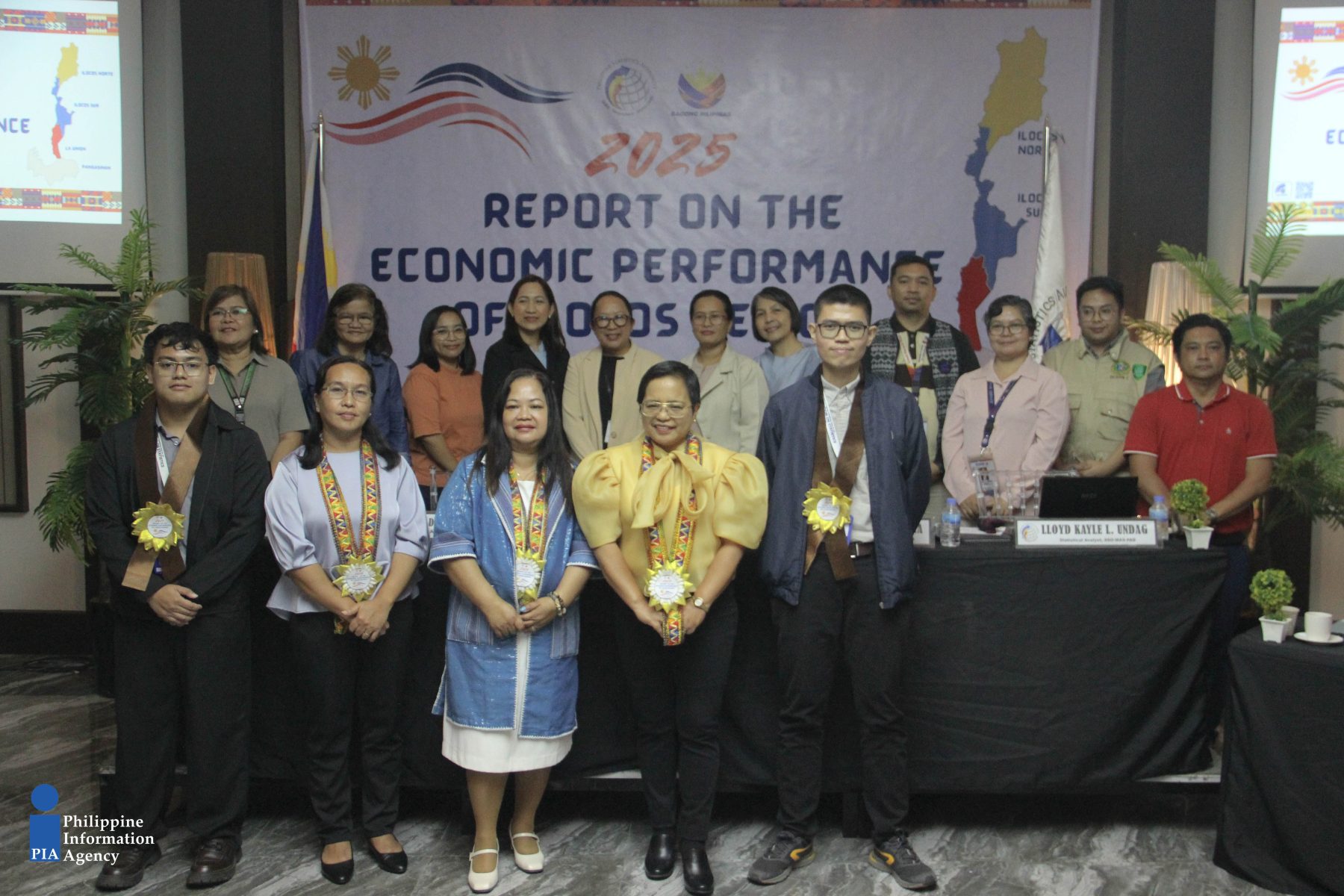
 Featured
Amianan Ventures
Ilocos Region's economy grew 4.5% in 2025, adding PHP 33.23 billion in output and lifting its Gross Regional Domestic Product to PHP 768.63 billion, according to data released by the Philippine Statistics Authority Regional Statistical Services Office I on April 24, 2026. The region contributed 3.3% to national GDP, ranked eighth among 18 regions by per capita GRDP at PHP 143,476, and outperformed its Northern Luzon neighbors, including the Cordillera Administrative Region at 4.4%, Cagayan Valley, and Central Luzon.
The national economy grew 4.4% in 2025. Ilocos Region grew faster.
How the Region Grew
Services carried the economy. At PHP 423.09 billion, the services sector accounted for 55.0% of total regional output and expanded 5.9%, the fastest of any major sector. Growth came from trade, tourism, transport, education, health services, real estate, and public administration, a broad base that reflects both private sector momentum and sustained government spending.
Tourism was a material driver. The Ilocos Region received over 6,000 international cruise passengers in early 2025 alone, with Currimao Port, Vigan City, and Paoay Church among the primary draws. Ilocos Norte, which generated PHP 10.4 billion in tourism-related GDP in recent years, continues to anchor the region's visitor economy through its heritage sites, growing hospitality infrastructure, and offshore renewable energy investment pipeline that is expanding investor confidence. DOT Ilocos is targeting five million tourists by 2028, supported by PHP 399 million in Tourism Roads Infrastructure Project allocations for 21 LGU projects.
Industry contributed PHP 232.73 billion, or 30.3% of total output, supported by manufacturing, construction, and utilities. Agriculture, forestry, and fishing made up the remaining 14.7% at PHP 112.82 billion, a stable contribution from a sector that continues to anchor rural livelihoods across La Union, Pangasinan, Ilocos Sur, and Ilocos Norte.
The Northern Luzon Comparison
DEPDev Ilocos Regional Director Stephanie Christiansen stated directly that Ilocos Region outperformed all other Northern Luzon economies in 2025, a result she attributed to the combined efforts of workers, producers, businesses, and government.
The regional comparison across Northern Luzon breaks down as follows:
Region2025 GRDPGrowth RateIlocos RegionPHP 768.63B4.5%Cordillera (CAR)PHP 394.96B4.4%Cagayan ValleyNot confirmed3.7% (estimated)National average—4.4%
CAR's 4.4% growth, while positive, represented a deceleration from 4.9% in 2024, driven by services at 22.6% expansion and a surprising 4.3% agricultural sector growth, the highest since 2018. Ilocos Region's 4.5% growth at a significantly larger absolute GRDP base is the stronger result in both rate and volume terms.
What the Per Capita Figure Means
At PHP 143,476 per capita GRDP, Ilocos Region ranked eighth nationally in 2025, up 4.3% year-on-year. Per capita GRDP is the measure most directly linked to living standards and economic opportunity for individuals in the region. Ranking eighth out of 18 regions places Ilocos in the upper half of the national distribution, ahead of several regions with larger absolute economic output but higher populations.
PSA-RSSO I Regional Director Sheila De Guzman noted that the figures reflect the region's continuing shift toward a service-oriented economy, with industry and agriculture providing structural support. That shift is not new, but its acceleration in 2025 is significant: a services economy generates different employment types, different infrastructure requirements, and different MSME opportunities than one anchored in agriculture or manufacturing.
What This Means for Northern Luzon
Three data points from this release carry direct implications for entrepreneurs, investors, and ecosystem builders in Northern Luzon.
First, Ilocos Region's services-led growth creates demand for digital tools, logistics, hospitality infrastructure, business process services, and professional services that local enterprises can supply. The 5.9% services expansion is not just an aggregate number. It represents business formation, job creation, and procurement activity that is happening in the region right now.
Second, tourism is the sector where the opportunity pipeline is most visible and most actionable for SMEs. The DOT target of five million tourists by 2028, combined with PHP 399 million in road infrastructure investment and the region's growing cruise tourism corridor, means that hospitality, food processing, transportation, and cultural heritage products businesses have a named and funded market to sell into.
Third, CAR's 4.4% growth, while slightly behind Ilocos Region, included the highest agricultural sector growth since 2018 and a 9.5% expansion in education. For investors and programme builders working across both regions, the complementarity between Ilocos Region's tourism and services momentum and CAR's agricultural and education growth creates a Northern Luzon corridor logic that is worth building programs around.
Original Source:
Market Context:
The Philippine economy grew 4.4% nationally in 2025, with Western Visayas recording the fastest regional growth and Caraga and Negros Island Region at 5.7% each among the top regional performers. All 18 Philippine regions recorded positive growth in 2025, with household spending growing in all regions and Cagayan Valley posting 8.0% household spending growth despite slower overall GRDP expansion. Cordillera's agricultural sector grew 4.3% in 2025, the highest since 2018, with high-value crop production rising 6.85% from 208,570 tons in 2024 to 222,480 tons in 2025, according to DepDev CAR's 2025 regional economic situation report. DOT Ilocos Region is targeting five million tourists by 2028 under the National Tourism Development Plan 2023–2028, with PHP 399 million allocated for 21 LGU tourism road projects under TRIP for 2025 to 2026.
Are you a founder, innovator, or community builder in Northern Luzon?
We're always looking for compelling stories from the region's ecosystem. Whether you're launching a startup, running a program, or doing something interesting — we'd love to feature you.