
Cagayan Valley's Startup Coalition Just Set Its Five-Year Direction. Two New Provinces Signed In, Two TBIs Were Named Provincial Leads, and a New Project Leader Took the Helm.
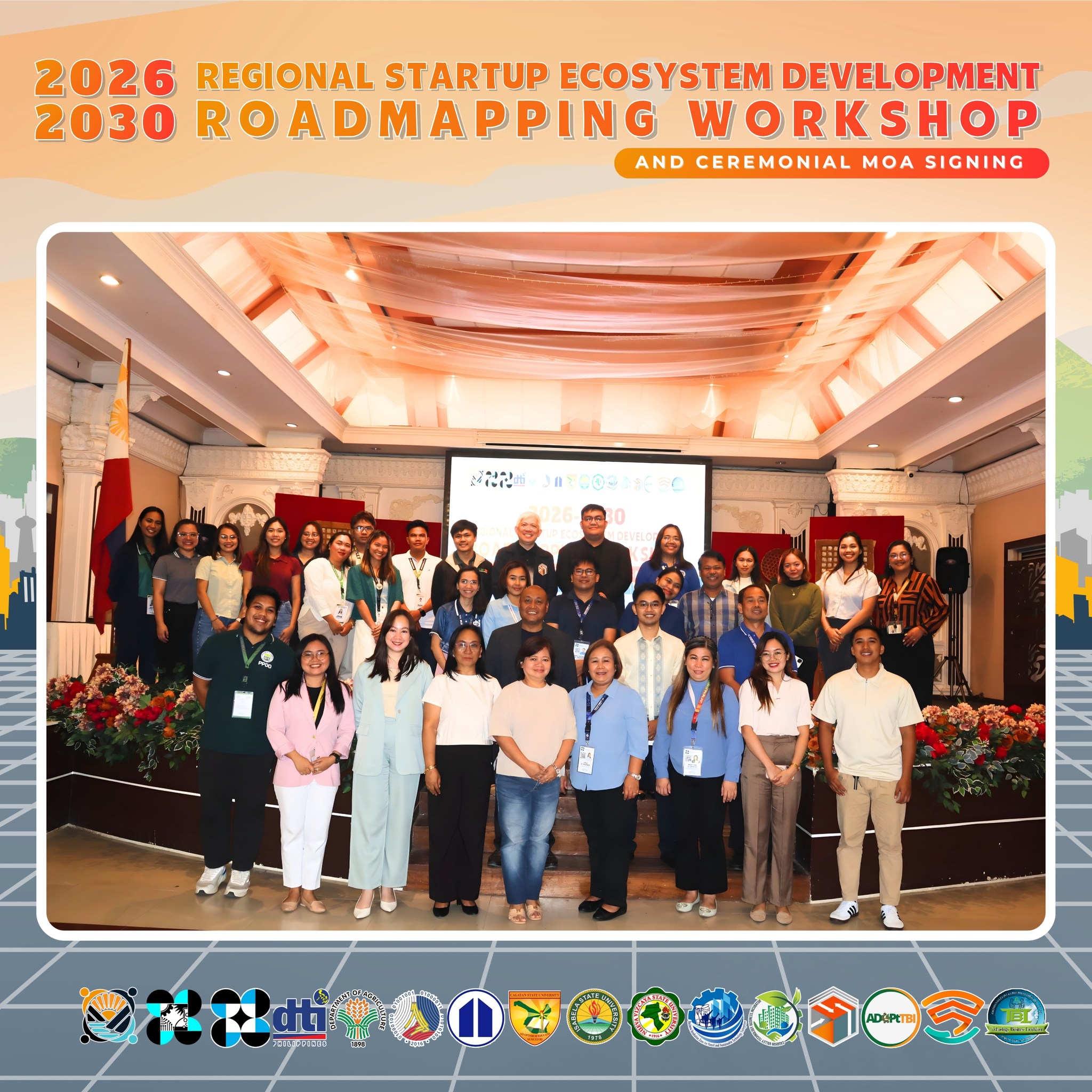
The SINAG Cagayan Valley 2026–2030 Regional Startup Ecosystem Roadmapping Workshop and MOA Signing on April 14, 2026 in Tuguegarao City formalized the Provincial Government of Isabela and LGU Solana as new consortium members, designated ADEPT TBI and IVATAN TBI as Provincial Startup Focal Organizations, and introduced Engr. Audy R. Quebral as the new Project Leader.
 Featured
Amianan Ventures
On April 14, 2026, stakeholders from across Region 2 gathered in Tuguegarao City for the SINAG Cagayan Valley 2026–2030 Regional Startup Ecosystem Roadmapping Workshop and Ceremonial MOA Signing, the most consequential single-day convening the region's startup coalition has held since its founding. The event produced four concrete structural outputs: a new five-year roadmap direction, two new government signatories to the SINAG consortium, two designated Provincial Startup Focal Organizations, and a formal leadership transition.
This is not a workshop that produced a report. It produced a governance structure and a named accountability chain for Cagayan Valley's startup ecosystem through 2030.
What Was Signed and What It Means
The ceremonial MOA signing welcomed two new SINAG Cagayan Valley Consortium members. The Provincial Government of Isabela, represented by Atty. Karla Louise Agbayani, and LGU Solana, represented by Atty. Jerhmy Ian Adduru, formally joined the consortium, bringing local government political and resource weight into a coalition that had previously been anchored primarily by universities and national agencies.
That shift matters. TBIs and DOST-funded programs can build startup pipelines. But scaling those pipelines into provincial economies requires LGU land, budget, procurement, and regulatory cooperation. Isabela's provincial government signing into SINAG means the region's most agriculturally productive province now has a formal mandate to align its economic development agenda with startup ecosystem building. Isabela produces approximately 30% of the Philippines' rice supply and has significant agri-processing, logistics, and agritech startup potential that has been underleveraged.

The Provincial Focal Organization Model
Two institutions were designated as Provincial Startup Focal Organizations, a new structural layer that places ecosystem coordination responsibility at the provincial rather than regional level. ADEPT TBI, representing Isabela, is the first DA Regional Office-operated technology business incubator in the Philippines, with a specific focus on agri-based startups. IVATAN TBI, representing Batanes, now has a formal mandate to coordinate startup initiatives across the country's northernmost province, one of the most geographically distinct and culturally rich territories in the region.
The PSFO model solves a persistent problem in regional startup ecosystems: programs designed at the regional level often reach provincial entrepreneurs last, if at all. By assigning a named institution with a formal designation to each province, SINAG is building the last-mile infrastructure that connects a Batanes founder or an Isabela agripreneur to the regional ecosystem without requiring them to travel to Tuguegarao for every interaction.
The Ecosystem Mapping Baseline
Before the breakout sessions, Mr. Josue A. Chua presented provincial startup ecosystem mapping reports covering Region 2's current landscape, including strengths, gaps, and priority opportunities across Cagayan, Isabela, Quirino, Nueva Vizcaya, and Batanes. That mapping work, conducted in collaboration with QBO Innovation and SINAG partners in 2025, provides the evidence base for the 2026–2030 roadmap.
Participants then applied the Startup Community Maturity Model in breakout sessions, identifying priority areas and targeted interventions specific to their localities. The Startup Community Maturity Model, developed by Startup Genome and widely used in regional ecosystem assessments globally, evaluates ecosystems across six dimensions: talent, capital, market reach, connectivity, knowledge, and infrastructure. Using it as the breakout framework means Cagayan Valley's 2026–2030 roadmap is built on a globally comparable baseline, not just local intuition.
The room included senior representation from DOST Region 2 ARD Laila Taguinod, DICT Region 2 ARD Magdalena Gomez, NVSU VP for Administration and Finance Dr. Cristina R. Salvosa, PCCI Cagayan Chapter, CSU TBI, ISU ATBI, University of Saint Louis Tuguegarao, NVSU Sabatan, DepDev Region 2, and startup representative PalaMig Kombucha, among others.
A Leadership Transition
The workshop also marked the formal introduction of Engr. Audy R. Quebral as the new Project Leader of SINAG Cagayan Valley, succeeding Dr. Junel B. Guzman following her retirement. Leadership continuity in regional startup consortia is a structural vulnerability that many programs do not plan for. SINAG's formal transition, conducted publicly at the roadmapping workshop, signals institutional maturity: the programme is larger than any single leader, and the handover is part of the record.
What This Means for Northern Luzon
SINAG Cagayan Valley is one of the most developed regional startup ecosystems in Northern Luzon. Its 2026–2030 roadmap, backed by the DOST-PCIEERD ReSEED Programme which allocated PHP 120 million nationally to regional startup ecosystem consortia, provides the strategic direction that Cagayan Valley's TBIs, HEIs, and startup enablers will operate within for the next five years. The addition of Isabela's provincial government and LGU Solana as consortium members, alongside the PSFO designations for ADEPT and IVATAN, means the ecosystem now has formal reach into every province in Region 2.
For founders and entrepreneurs in Cagayan, Isabela, Quirino, Nueva Vizcaya, and Batanes: the institutional infrastructure to support your startup has just been formally mapped, expanded, and given a five-year direction. The entry points are the Provincial Startup Focal Organizations in your province. For Isabela, that is ADEPT TBI. For Batanes, that is IVATAN TBI. For the rest of Region 2, SINAG Cagayan Valley's network of TBIs and Negosyo Centers is the starting point. Visit sinagcagayanvalley.com to learn more.
Original Source:
Market Context:
DOST-PCIEERD's ReSEED Programme allocated PHP 120 million nationally to support regional startup ecosystem consortia, with SINAG Cagayan Valley among the established consortium networks operating under its Growth Track framework. The Innovative Startup Act Committee, now chaired by DICT, has outlined plans to align Philippine Startup Week 2026 with ASEAN priorities, positioning the Philippines as a regional startup hub, with provincial ecosystem development as the foundational layer. Isabela produces approximately 30% of the Philippines' annual rice supply, giving Region 2 one of the most developed agri-processing and agritech startup opportunity landscapes in the country. Cagayan Valley's QBO Innovation-led ecosystem mapping in 2025 assessed startup maturity across Tuguegarao City and neighboring municipalities, providing the data baseline that the April 14, 2026 roadmapping workshop built its 2026–2030 strategic direction on.
Are you a founder, innovator, or community builder in Northern Luzon?
We're always looking for compelling stories from the region's ecosystem. Whether you're launching a startup, running a program, or doing something interesting — we'd love to feature you.