
Five Baguio Startups Just Pitched AI Diagnostics, Wastewater Treatment, Pine Needle Charcoal, Edible Cups, and Crime Scene Reconstruction to the Mayor. This Is What Incubator Baguio Is Building.
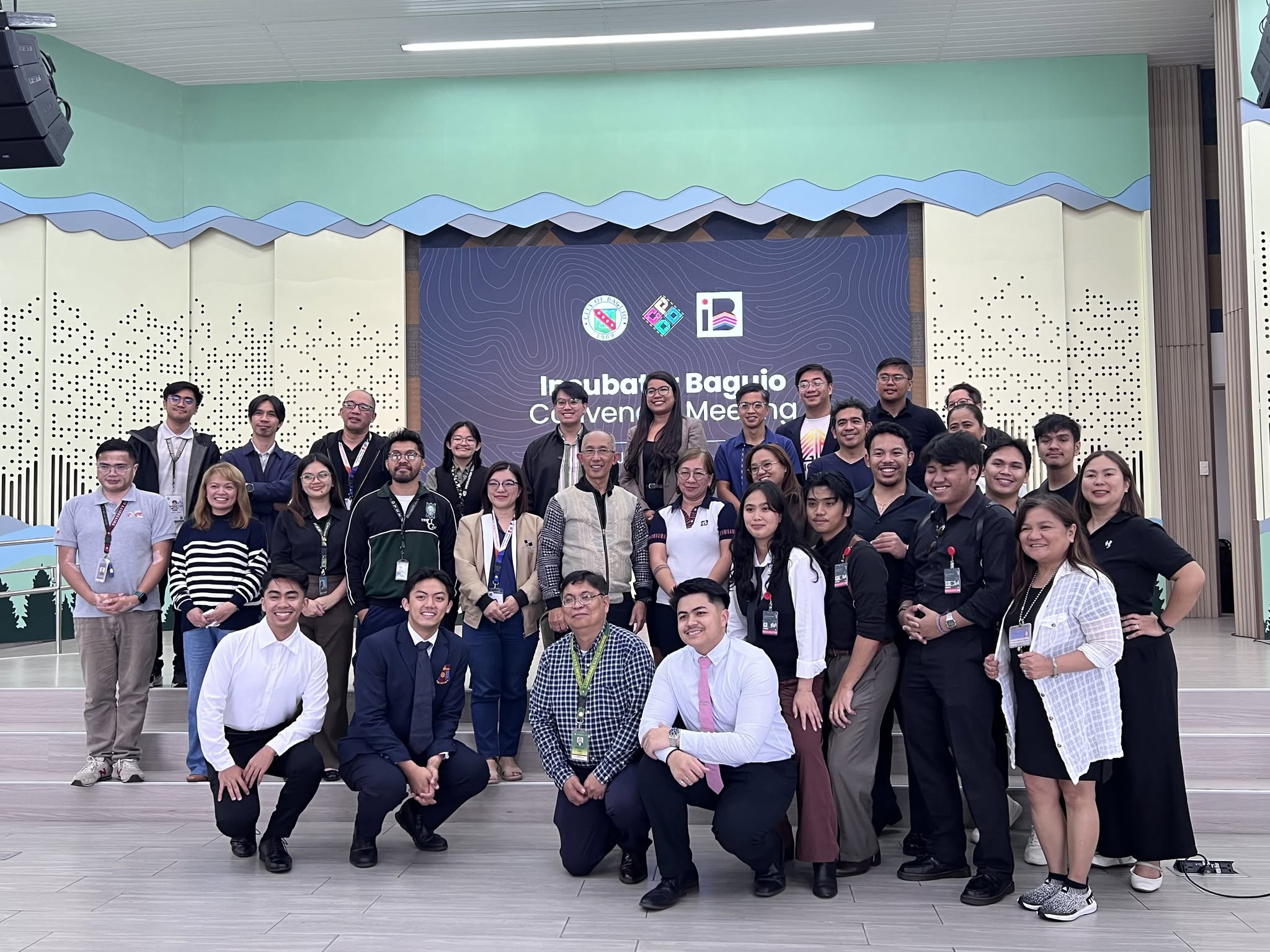
The Incubator Baguio Startup Showcase on June 11, 2026 at Baguio City Hall featured five startups presenting research-driven solutions in healthcare, environmental sustainability, waste management, and public safety, held alongside the Incubator Baguio Alignment Meeting of the Baguio City Research and Innovation Alliance, with Mayor Benjamin Magalong providing direct feedback and committing to connect founders with his network.
 Featured Partner
Inv8 Studio
Innovation Partner for Startups & Growing Businesses
Five startup founders walked into Baguio City Hall on June 11, 2026, and pitched solutions to some of the city's most persistent challenges directly to the Mayor. One was building AI-powered lung disease diagnostics. Another was turning spent coffee grounds into a wastewater treatment technology. A third was converting pine needle waste, one of Baguio's most recurring fire hazards, into clean fuel. A fourth had developed an edible cup designed to replace single-use plastics. The fifth had built a software platform that reconstructs crime scenes in three dimensions from photographs.
Mayor Benjamin Magalong did not just watch. He gave feedback and told the founders he had already reached out to people in his network who could help support their development and implementation. That is the kind of room Incubator Baguio is now capable of putting founders in.

The Incubator Baguio Startup Showcase was held alongside the Incubator Baguio Alignment Meeting, a convening of the Baguio City Research and Innovation Alliance established under Ordinance No. 063-2023, which institutionalized the BCRIA and formalized Incubator Baguio's role as the platform that bridges research, startup incubation, and commercialization in the city.
The Five Startups and What They Are Building
Auscultate is an AI-powered decision support tool for healthcare professionals, developed by co-founders Johan Rickardo Roxas, Ramon Emmiel Jasmin, and Rithik Tank. The technology assists in diagnosing pulmonary diseases through lung sounds, pairing a specialized digital stethoscope with an integrated mobile application. The combined platform gives doctors a single tool for faster, more accessible, and data-driven clinical assessments. In a country where pulmonary disease burden is significant and where many healthcare facilities outside major urban centers operate with limited specialist access, a tool that supports faster and more reliable respiratory diagnosis at the point of care is a direct response to a real and documented gap.

Grounded, founded by Engr. Rodolfo Tabangin, addresses wastewater treatment using spent coffee grounds and clay-based materials as bio-adsorbents capable of removing excess nutrients and heavy metals from contaminated water. The circular economy logic is clean: coffee waste, which Baguio generates in significant quantities given its café culture and coffee tourism, becomes the input for an environmental remediation technology. Low energy requirements and scalability make it a viable option for community-level and industrial-scale water treatment applications.

EcoVerde, founded by Stefano Louis Solis, converts pine needle waste into charcoal briquettes. This is a problem-and-solution pairing that is specific to Baguio in a way that no outside investor or Manila-based startup could have identified. Pine needles accumulate on the forest floor and in residential areas throughout the Cordillera, creating fire risk during dry season and waste management challenges year-round. EcoVerde turns that accumulated waste into a clean, reliable fuel source, reducing fire risk, addressing waste, creating a sustainable energy product, and generating community-level economic activity in the process. The startup is working with local government collaboration to build out its community participation model.

Tasarap, founded by Lloyd Saysay, has developed a locally produced edible cup that can hold hot beverages for up to 50 minutes and cold beverages for up to 80 minutes, with better insulation than conventional disposable cups. The single-use plastics problem in Philippine cities, including Baguio, is one of the most visible waste management challenges that local governments face. A cup that becomes food rather than waste after use is a direct product-level intervention in that problem, and the fact that it is locally produced gives it a supply chain and economic development dimension that an imported alternative cannot provide.

AI Core, founded by Augnina Reburiano, is a software platform that generates three-dimensional reconstructions of crime scenes from photographs. The technology is designed to support forensic investigations by providing investigators with more detailed and accurate visualizations for documentation and case analysis. Crime scene documentation quality has direct consequences for the integrity of investigations and prosecutions. A software tool that improves that documentation using photographs that investigators are already taking is a practical, deployable upgrade to existing forensic workflows.

What the Alignment Meeting Established
The startup showcase was held alongside the Incubator Baguio Alignment Meeting, bringing together leaders from all four sectors of the Quadruple Helix framework that BCRIA is structured around.
The academic institutions represented included the University of the Philippines Baguio, University of the Cordilleras, and Saint Louis University. Government representatives came from the Department of Trade and Industry, DOST, DICT, TESDA, and DepEd. Industry and civil society leaders completed the quadruple helix alignment.
The meeting focused on identifying fresh perspectives and re-aligning collective initiatives to better serve the community. Former City Councilor Levy Lloyd Orcales discussed the significance of Ordinance No. 063-2023, which institutionalized the BCRIA and reinforced Baguio's commitment to fostering research, innovation, and entrepreneurship within a formal governance structure.
City Planning, Development and Sustainability Coordinator Ar. Donna R. Tabangin presented Incubator Baguio's accomplishments and outlined upcoming initiatives, highlighting the incubator's continuing work to strengthen innovation pathways, support startup growth, and facilitate the commercialization of research-based solutions.
The alignment meeting is significant not because of what was said in the room but because of what it represents structurally. A city government that has institutionalized a research and innovation alliance through ordinance, activated a multi-sector alignment process, and created a startup showcase platform where founders pitch directly to the Mayor is a city that has made ecosystem building a governance priority, not just a promotional activity.
What Mayor Magalong's Response Signals
Mayor Magalong's engagement at the showcase was not ceremonial. He provided substantive feedback on the innovations presented and, crucially, shared that he had already reached out to individuals and professionals in his network whose expertise could help support the development and implementation of the featured projects.
That is a mayoral office functioning as an active connector in the startup ecosystem, not just as a symbolic endorser. For early-stage founders in Baguio, the difference between a mayor who attends a showcase and applauds and a mayor who leaves the room and makes calls on behalf of the founders is the difference between recognition and traction.
The discussion following the presentations underscored the importance of collaboration and connecting innovators with potential partners and stakeholders to bring their solutions to a wider market. That framing, connecting founders outward rather than keeping innovation internal to the incubator, is the right orientation for an ecosystem at Baguio's stage of development.
What This Means for the Broader Cordillera Ecosystem
The five startups that presented at the Incubator Baguio Startup Showcase are not finished companies. They are early-stage ventures in varying stages of development, each tackling a problem that is real, specific, and solvable. What the showcase demonstrates is that Baguio's innovation ecosystem is now capable of producing that quality of founder and that quality of solution at a pace that justifies the institutional infrastructure being built around it.
The BCRIA's quadruple helix structure, connecting academe, industry, government, and civil society, is the architecture that most mature innovation ecosystems operate within. Baguio has formalized that structure through ordinance and activated it through regular alignment meetings and public showcases. That is institutional work that takes years to build and that compounds in value as more founders, researchers, and industry partners engage with it over time.
For founders across the Cordillera and Northern Luzon who are building solutions to local problems, Incubator Baguio's growing infrastructure is the most proximate support system available. For the institutions, investors, and partners watching Northern Luzon's startup ecosystem develop, the June 11 showcase is a clear signal of the direction and the quality of what is being built.
Original Source
Market Context
The Baguio City Research and Innovation Alliance, established under Ordinance No. 063-2023, is one of the few formally institutionalized quadruple helix innovation governance structures at the city government level in the Philippines. Incubator Baguio, as the operational platform of the BCRIA, positions Baguio City as one of Northern Luzon's most structurally advanced startup ecosystem nodes, building on the city's existing concentration of higher education institutions, tourism infrastructure, and highland geographic identity. The five startups that presented at the June 11 showcase collectively address healthcare diagnostics, environmental remediation, waste-to-energy conversion, sustainable packaging, and forensic technology, problem domains with documented unmet needs in both Baguio specifically and the Philippines more broadly. For Northern Luzon's startup ecosystem, the development of Incubator Baguio as a formalized incubation and commercialization platform creates a regional anchor institution capable of supporting founders across the Cordillera and connecting them to national and international partners, investors, and markets.
Are you a founder, innovator, or community builder in Northern Luzon?
We're always looking for compelling stories from the region's ecosystem. Whether you're launching a startup, running a program, or doing something interesting — we'd love to feature you.