
Grade Schoolers in Pangasinan Spent Two Days Learning Arduino, Coding, and Electronics. SIGLAT and PHINMA-UP Are Building the Pipeline Early.
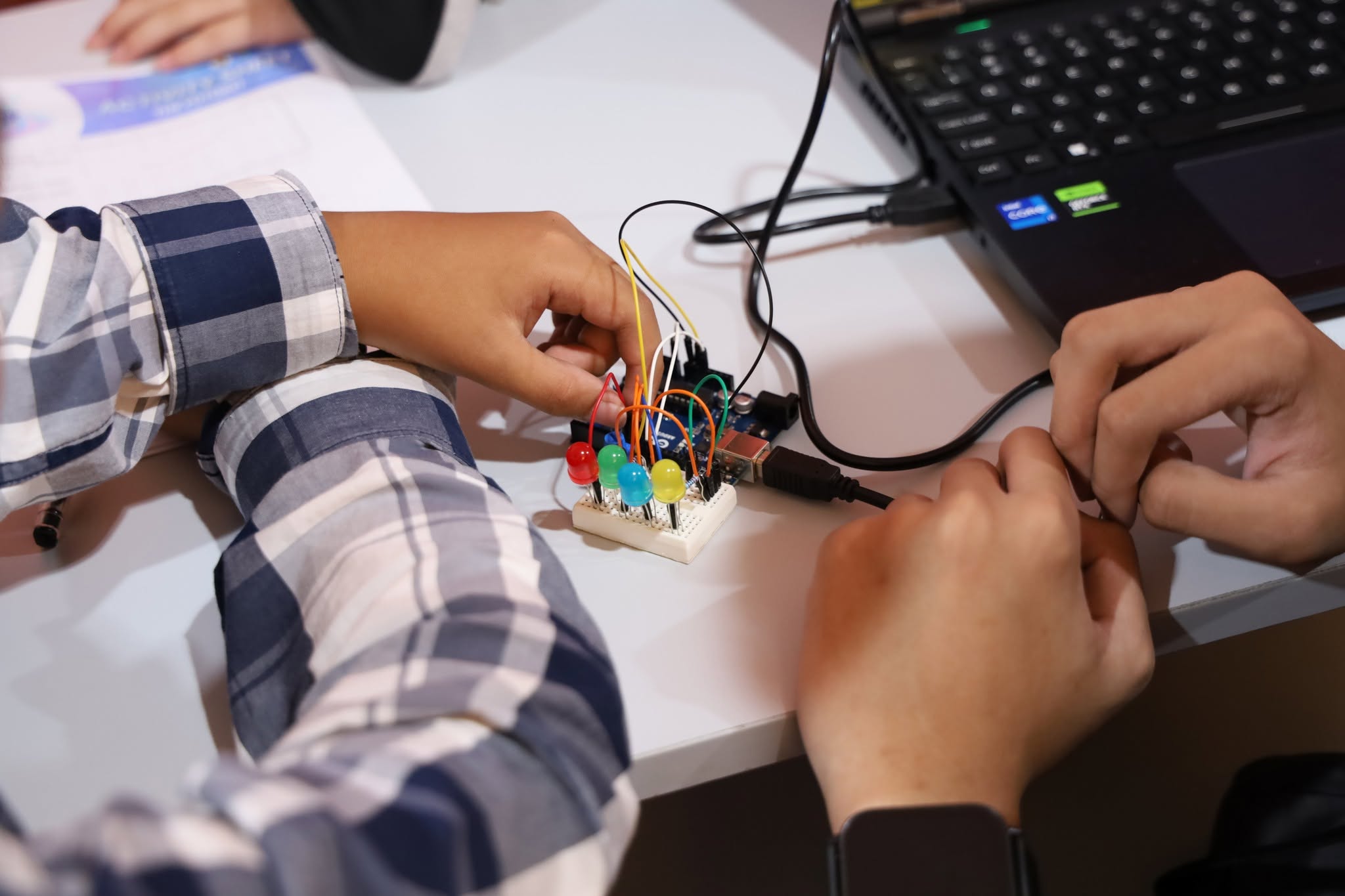
SIGLAT, in partnership with Computer Engineering interns from PHINMA-University of Pangasinan, facilitated ArduInnovate: The Future, a two-day hands-on workshop that introduced grade school students to microcontrollers, basic programming, and electronics through guided activities using Arduino Uno, Arduino/Genuino 101, and ESP32 devices.
 Featured
Amianan Ventures
Most conversations about building Northern Luzon's technology talent pipeline focus on university students and young professionals. SIGLAT and PHINMA-University of Pangasinan's Computer Engineering interns just ran a workshop that starts that conversation much earlier.
ArduInnovate: The Future brought grade school students into a two-day hands-on learning experience covering the fundamentals of electronics, programming, and microcontroller technology. The participants were not passive observers. They handled actual hardware, wrote basic code in the Arduino IDE, and built a working understanding of how software and hardware connect to bring an idea to life.
For young learners who have grown up using technology as consumers, this was likely the first time they engaged with it as builders.
What the Workshop Actually Covered
The two days were structured to move participants from component familiarity to practical application, using a progression that respected the age of the learners without reducing the substance of what was being taught.
Participants were introduced to three microcontroller platforms: the Arduino Uno, the Arduino/Genuino 101, and the ESP32. Each represents a different capability level and application context, from basic input-output operations to Bluetooth and Wi-Fi connectivity. For grade schoolers, the exposure to all three was not about mastery. It was about developing a mental map of the landscape: that these devices exist, that they have different strengths, and that they can be programmed to do specific things.
The Arduino IDE introduced the participants to the environment where code becomes action. They wrote simple programs and observed the direct connection between a line of code and a physical response from a component. That moment, when a child writes an instruction and a light turns on or a buzzer sounds, is one of the most effective entry points into computational thinking available in hands-on STEM education.
Beyond the hardware and software, the workshop was explicitly designed to develop broader skills: creativity, critical thinking, and problem-solving. Those are not outcomes that come from watching a demonstration. They come from making mistakes with real components, debugging a program that does not work as expected, and arriving at a solution through iteration. The hands-on format of ArduInnovate made those learning moments the structure of the workshop, not incidental byproducts.

Why This Partnership Structure Matters
The facilitation model for ArduInnovate deserves attention as much as the curriculum. SIGLAT organized and led the workshop, and the teaching was done in partnership with Computer Engineering interns from PHINMA-University of Pangasinan.
That pairing is significant for two reasons. First, it means that university-level engineering students were actively engaged in science and technology outreach, translating what they are learning in their own coursework into teaching experiences for younger learners. That is a form of learning reinforcement that benefits the interns as much as the grade school participants. Teaching a concept to someone else is one of the most effective ways to solidify understanding of it.
Second, it creates a visible career pathway. When a grade school student in Pangasinan learns about microcontrollers from a university student also from Pangasinan, the message embedded in that interaction is not abstract. It is concrete: this person, who looks like me and is from here, is studying this at a university I can also attend. The mentor-mentee structure, even in a two-day workshop format, builds the kind of local role model visibility that classroom instruction alone cannot provide.

What SIGLAT Is Building in Northern Luzon
ArduInnovate is one data point in a larger picture of what SIGLAT is developing in the region. Building a technology ecosystem that is self-sustaining over time requires more than supporting the founders and professionals who are already in the workforce. It requires investing in the generation that is still in grade school, because the engineers, developers, and innovators who will staff the next decade of Northern Luzon's technology sector are sitting in elementary classrooms right now.
Workshops like ArduInnovate are the earliest-stage investments in that pipeline. They do not need to produce engineers immediately. What they need to do is plant a credible association between young people and technology as something they can create, not just consume, and establish that the region they live in is a place where that kind of learning is available and valued.
Both of those outcomes were present at ArduInnovate: The Future.
What Parents Should Know
The parents and guardians who allowed their children to participate in this workshop made a decision worth recognizing. Supporting a child's participation in a technical workshop, particularly one that involves unfamiliar hardware and programming concepts, requires a degree of trust in the organizers and a willingness to value that kind of learning alongside the academic and extracurricular activities that compete for children's time.
The fact that parents showed up, stayed engaged, and encouraged their children through the two days is itself an ecosystem signal. A regional technology pipeline does not grow in isolation from families. It grows when parents and communities recognize early technology education as something worth investing their children's time in.
The participants who left ArduInnovate with a basic understanding of how a microcontroller works, how a program executes, and how hardware and software connect are ahead of where most of their peers will be when they reach high school. That is not a minor head start in a world where computational literacy is increasingly a foundational skill across nearly every professional field.
Original Source
This article is based on the event announcement published by SIGLAT regarding the ArduInnovate: The Future workshop facilitated in partnership with Computer Engineering interns of PHINMA-University of Pangasinan. We are grateful for the original reporting that brought this initiative to public attention.
Market Context
The Philippines faces a documented shortage of technology talent relative to the pace of its digital economy growth, with the IT-BPM industry and the emerging startup ecosystem both competing for a limited pool of STEM-trained graduates. Foundational technology education at the grade school level is one of the highest-leverage investments available for closing that gap over a ten-to-fifteen-year horizon, by expanding the population of students who arrive at high school and university with prior exposure to programming and hardware concepts. Pangasinan, as one of the most populous provinces in Northern Luzon with a significant concentration of higher education institutions, has the infrastructure to support a regional STEM talent pipeline that serves both local enterprises and national technology industries. Initiatives like ArduInnovate, which introduce microcontroller programming and electronics to young learners in a hands-on format, are the upstream activities that determine the size and quality of the region's technology talent pool a decade from now.
Are you a founder, innovator, or community builder in Northern Luzon?
We're always looking for compelling stories from the region's ecosystem. Whether you're launching a startup, running a program, or doing something interesting — we'd love to feature you.