
Baguio Startup Selected by UNDP to Pilot Circular Economy Innovation Through Community Refill Network
Baguio-based Green Haven OPC, through its Tingi Station initiative, is the only Northern Luzon innovator selected under the UNDP-supported Circular Solutions Innovation Challenge, demonstrating how local startups can help cities reduce plastic waste while creating more sustainable community-based businesses.
 Featured
Amianan Ventures
A Baguio Startup Is Showing How Circular Economy Can Start in the Neighborhood
Baguio City is proving that innovation in sustainability does not always require new technologies. Sometimes, it begins with rethinking how everyday products are bought and consumed.
Green Haven OPC, the company behind Tingi Station, has been selected as one of only ten innovators nationwide under the 2025 Circular Solutions Innovation Challenge. More notably for the region, it is the only selected implementation partner from Northern Luzon among the first batch of innovators working with local governments to pilot circular economy solutions.
Supported through the European Union-Philippines Green Economy Partnership, implemented by the Department of Environment and Natural Resources, the Department of the Interior and Local Government, and the United Nations Development Programme (UNDP), the initiative helps cities move beyond circular economy planning by testing practical solutions that can be implemented at the community level.
Turning Refill Into Everyday Infrastructure
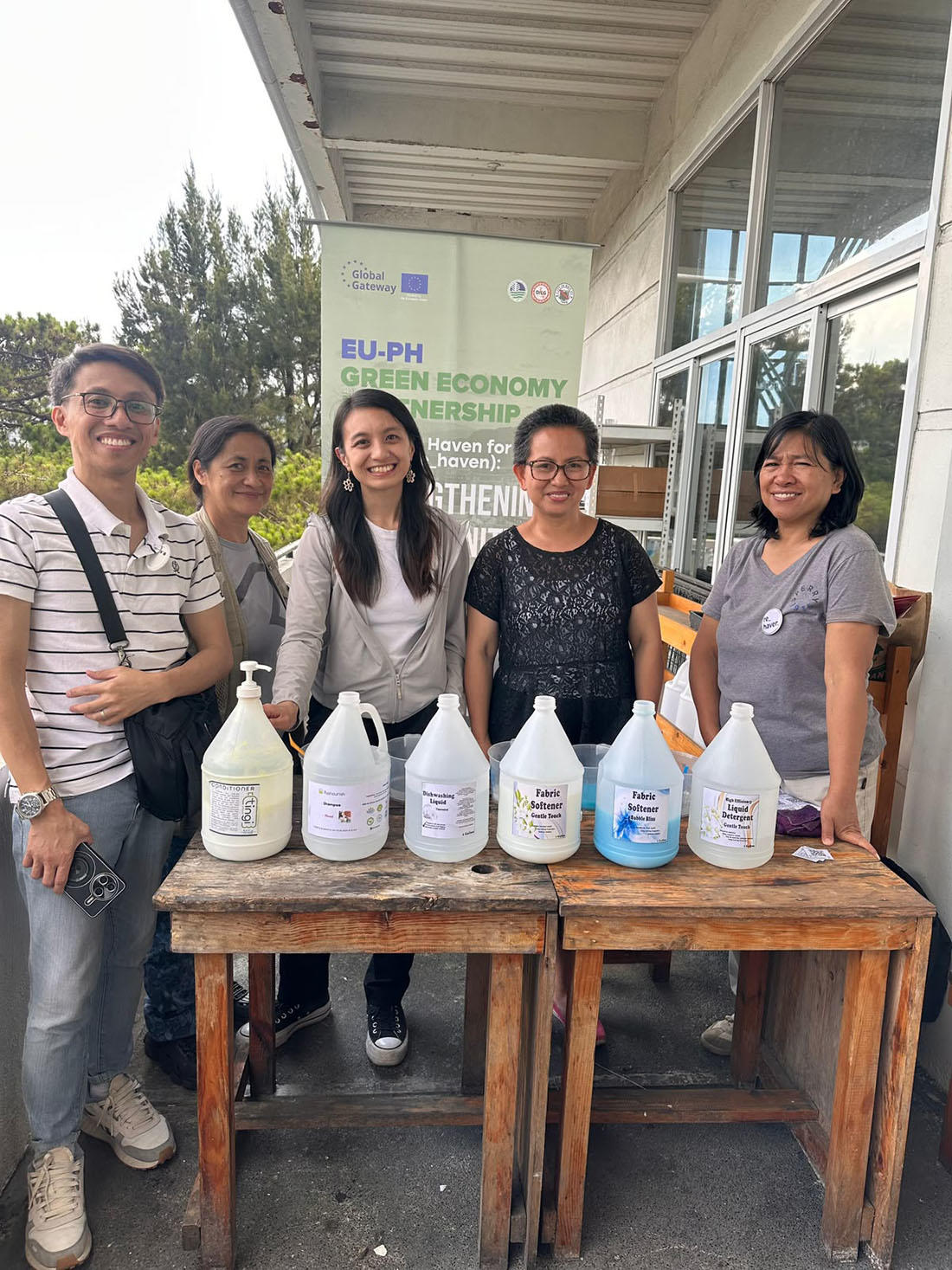
Green Haven OPC’s project, Reuse Haven for All (re_haven), focuses on creating a community-based reuse and refill ecosystem across Baguio City.
Instead of relying on single-use plastic packaging, households can purchase everyday essentials in reusable containers through participating barangays and sari-sari stores that serve as neighborhood refill stations. The initiative also engages youth advocates while training waste workers in container collection, distribution, and management, creating opportunities that combine environmental action with livelihood generation.
The project has already established partnerships with barangays, launched behavior change campaigns, conducted refill product demonstrations, and opened a distribution hub inside the Baguio City Hall Cooperative Store, demonstrating how circular economy principles can be integrated into existing community networks.
Circular Economy Is Moving From Policy to Practice
Many local governments have already adopted sustainability and waste reduction plans. The greater challenge is translating those plans into systems that people can use in their daily lives.
The Circular Solutions Innovation Challenge addresses this gap by supporting enterprises that can pilot practical models within partner cities. Rather than funding concepts alone, the program allows innovators to validate solutions under real operating conditions while working closely with local governments and communities.
The first cohort includes projects covering plastic recovery, organic waste management, renewable energy, circular tourism, sanitation, and digital recycling systems across ten cities and municipalities in the Philippines.
What This Means for Northern Luzon’s Innovation Ecosystem
Green Haven OPC’s selection represents more than recognition for a single startup. It demonstrates that Northern Luzon is capable of producing ventures that address national sustainability challenges through scalable business models.
Unlike many environmental initiatives that depend primarily on public programs, Tingi Station operates as an enterprise-driven solution that works alongside local government, communities, and neighborhood businesses. This illustrates how startups can become implementation partners for public sector innovation rather than simply technology providers.
For founders across Northern Luzon, the project highlights a growing opportunity in climate technology and circular economy ventures. As governments increasingly seek practical solutions for waste management, resource efficiency, and community resilience, startups that combine commercial viability with measurable environmental impact may find expanding opportunities for collaboration and growth.
The selection also reinforces Baguio City’s position as an emerging hub for sustainability innovation, showing that regional startups can compete nationally by solving local problems with scalable approaches.
A New Opportunity for the Next Wave of Innovators
Building on the success of the first cohort, the European Union-Philippines Green Economy Partnership has opened the 2026 Circular Solutions Innovation Challenge, inviting startups, MSMEs, cooperatives, academic institutions, social enterprises, and other solution providers from around the world to develop circular economy projects for ten additional partner local governments.
Selected innovators may receive up to US$40,000 in funding and implementation support for projects that create measurable environmental impact, generate green jobs, and strengthen local economies. Applications are open until 7 August 2026.
The progress of Green Haven OPC demonstrates that meaningful innovation often begins by improving ordinary systems that people use every day. As circular economy initiatives continue expanding across the country, Baguio’s experience offers a practical example of how regional startups can help shape more sustainable and resilient local economies.
Original Source
Market Context
The circular economy is emerging as one of the fastest-growing areas of innovation globally, shifting economic activity away from the traditional “take, make, dispose” model toward systems that prioritize reuse, repair, recycling, and resource efficiency. For startups, this creates opportunities to build businesses that address environmental challenges while generating sustainable revenue. In the Philippines, government agencies and international development partners are increasingly investing in circular economy initiatives that strengthen local value chains, reduce waste, create green jobs, and improve urban resilience. As more cities adopt circular economy strategies, ventures capable of delivering scalable, community-based solutions are likely to play an increasingly important role in local economic development.
Are you a founder, innovator, or community builder in Northern Luzon?
We're always looking for compelling stories from the region's ecosystem. Whether you're launching a startup, running a program, or doing something interesting — we'd love to feature you.