
DICT-CAR Opens Stakeholder Session to Help Shape the Future of Freelancing in the Philippines
The Department of Information and Communications Technology – Cordillera Administrative Region (DICT-CAR), through its ICT Industry Development Bureau (IIDB), is convening freelancers, digital professionals, startup founders, agencies, academe, and other ecosystem stakeholders for a policy-focused discussion aimed at developing recommendations for programs and policies that support the country’s growing freelance and digital workforce.
 Featured
Amianan Ventures
Freelancers Are Becoming an Important Part of the Digital Economy
The rise of remote work, digital platforms, and online services has created new opportunities for Filipinos to participate in the global economy without being limited by geography.
Freelancers, virtual assistants, developers, designers, digital marketers, creative professionals, and online entrepreneurs now form an increasingly important part of the country’s digital workforce.
But as the sector grows, so do questions around access to opportunities, skills development, business support, and policies that can help freelancers build sustainable careers and enterprises.
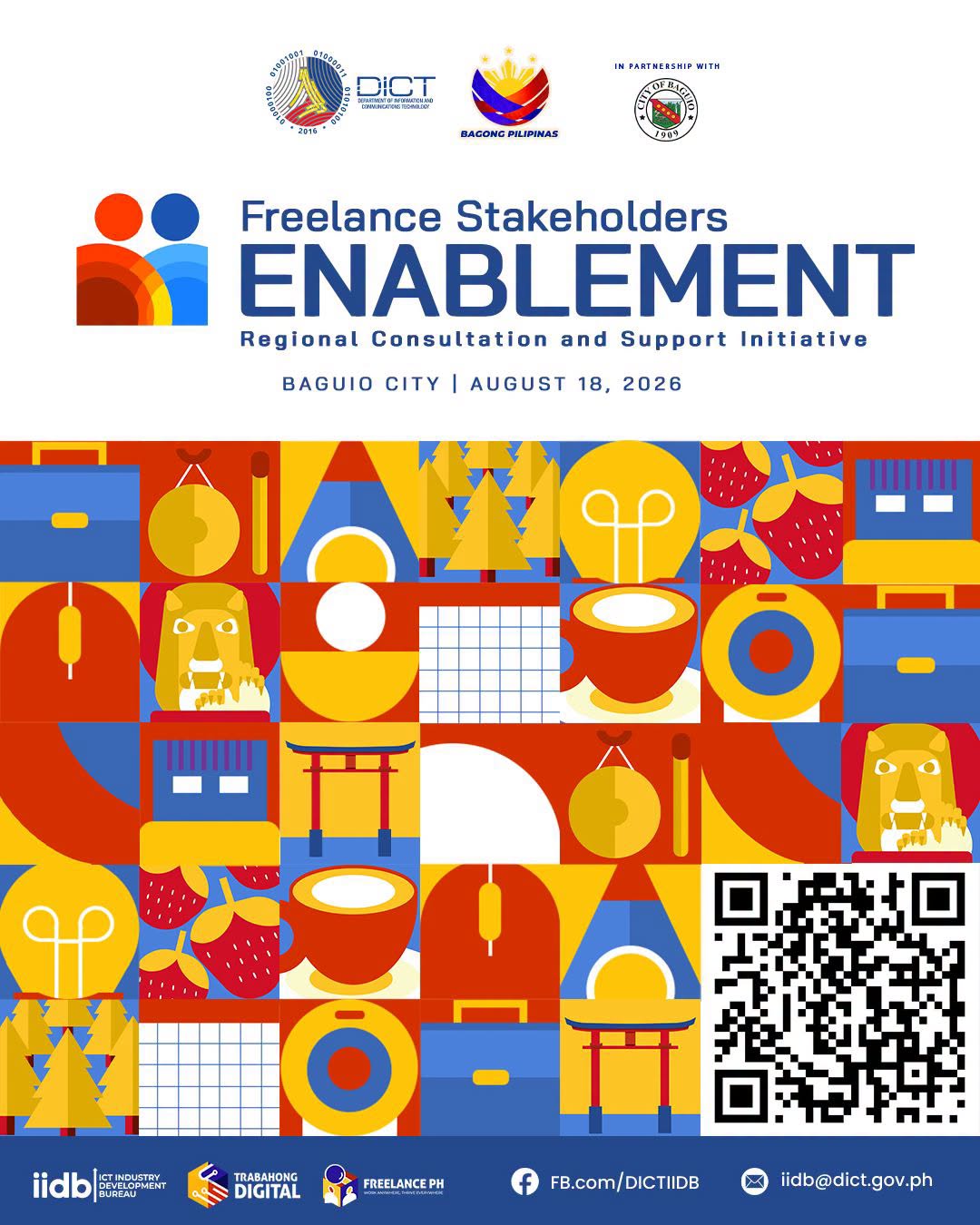
Recognizing the need for stronger stakeholder participation, the Department of Information and Communications Technology – Cordillera Administrative Region (DICT-CAR), through the ICT Industry Development Bureau (IIDB), is organizing the Freelance Stakeholders Enablement on August 18, 2026, at the City Session Hall in Baguio City.
From Networking to Policy Development
The activity is designed as more than a networking event.
It will bring together freelancers, digital professionals, agency owners, startup founders, freelancer community leaders, academic institutions, private sector organizations, and innovation ecosystem enablers to discuss the realities and needs of the freelance sector.
Participants will contribute their experiences, recommendations, and perspectives to discussions that may help shape future programs and initiatives under Freelance PH and Trabahong Digital.
A key focus of the activity is the development of recommendations that could contribute to the first proposed ordinance in the Philippines dedicated to supporting and empowering freelancers.
This approach places the people directly involved in the digital economy at the center of policy development.
Why Freelancer Input Matters
Policies designed for emerging industries can only be effective when they reflect the actual experiences of the people they intend to support.
Freelancers encounter challenges that can differ significantly from those of traditional employees and established businesses. These can include access to skills development, digital opportunities, business networks, market access, and pathways toward sustainable entrepreneurship.
Creating a structured space for freelancers and other stakeholders to share these experiences can help policymakers better understand where support systems are working and where new interventions may be needed.
The consultation can also help identify opportunities for collaboration between government, industry, academe, communities, and digital professionals.
Freelancing and Entrepreneurship Are Increasingly Connected
The freelance economy is not limited to individual workers selling professional services.
Many freelancers eventually become entrepreneurs by building agencies, creating digital products, developing startups, hiring teams, or turning specialized expertise into scalable businesses.
This makes the freelance sector relevant to the broader entrepreneurship and innovation ecosystem.
A developer may begin as a freelancer before launching a software startup. A designer may build an agency. A digital marketer may develop a technology-enabled service. A virtual assistant may eventually create a distributed team serving international clients.
Supporting freelancers, therefore, can also create a pipeline of future entrepreneurs and digital businesses.
The Cordillera Has an Opportunity to Shape the Digital Workforce
For the Cordillera Administrative Region, strengthening the freelance economy can create new pathways for economic participation without requiring workers and entrepreneurs to relocate to major metropolitan centers.
Baguio and other communities across the region already have a growing pool of students, creatives, technology professionals, entrepreneurs, and digital workers.
Connecting these talents to better skills development, networks, markets, and policy support could help the region capture more value from the global digital economy.
The stakeholder session provides an opportunity to move this conversation from individual experiences toward collective recommendations that can inform future programs and local policy.
Stakeholder Enablement Scheduled for August 18
The Freelance Stakeholders Enablement will be held on:
📅 August 18, 2026
🕗 8:00 AM – 5:00 PM
📍 City Session Hall, Baguio City
The event is open to freelancers, digital professionals, agency owners, startup founders, freelancer community leaders, academe, private sector partners, and ecosystem enablers across the Cordillera.
Registration is free, with meals and refreshments provided. Slots are limited.
Registration:
https://tinyurl.com/CARFreelanceEnablementRegister
For inquiries, participants may contact car.iidb@dict.gov.ph.
What This Means for Northern Luzon’s Innovation Ecosystem
Innovation ecosystems are shaped not only by startups and investors but also by the policies and infrastructure that allow people to participate in the digital economy.
The Freelance Stakeholders Enablement is significant because it connects workforce development with entrepreneurship, digital transformation, and local economic development.
If freelancers are given stronger pathways to develop their skills, access markets, form businesses, and participate in policymaking, they can become more than participants in the digital economy. They can become founders, employers, technology builders, and contributors to the region’s innovation ecosystem.
For the Cordillera, building a stronger digital workforce could become an important part of creating an economy where talent can remain local while serving markets beyond the region.
The more important question is no longer whether freelancing will play a role in the future of work. It is how communities, institutions, and governments can build the conditions for freelancers and digital entrepreneurs to grow sustainably.
The future of work is being shaped by the people already working differently today. By bringing freelancers and digital professionals into the policy conversation, the Cordillera has an opportunity to help build a more inclusive, sustainable, and future-ready digital economy.
Original Source
Registration:
https://tinyurl.com/CARFreelanceEnablementRegister
Contact: car.iidb@dict.gov.ph
Market Context
The global freelance and digital services economy continues to create new pathways for employment and entrepreneurship, particularly for professionals who can serve international clients remotely. For the Philippines, this presents an opportunity to expand participation in the global digital economy while creating livelihood and business opportunities outside traditional employment centers. As freelancing increasingly overlaps with agency building, digital entrepreneurship, and startup creation, policies supporting freelancers can also contribute to broader innovation ecosystem development. For Northern Luzon, strengthening the digital workforce can help retain local talent while connecting regional professionals and businesses to national and international markets.
Are you a founder, innovator, or community builder in Northern Luzon?
We're always looking for compelling stories from the region's ecosystem. Whether you're launching a startup, running a program, or doing something interesting — we'd love to feature you.