
Baguio Innovation Leaders Explore Collaboration to Strengthen the Local Startup Ecosystem
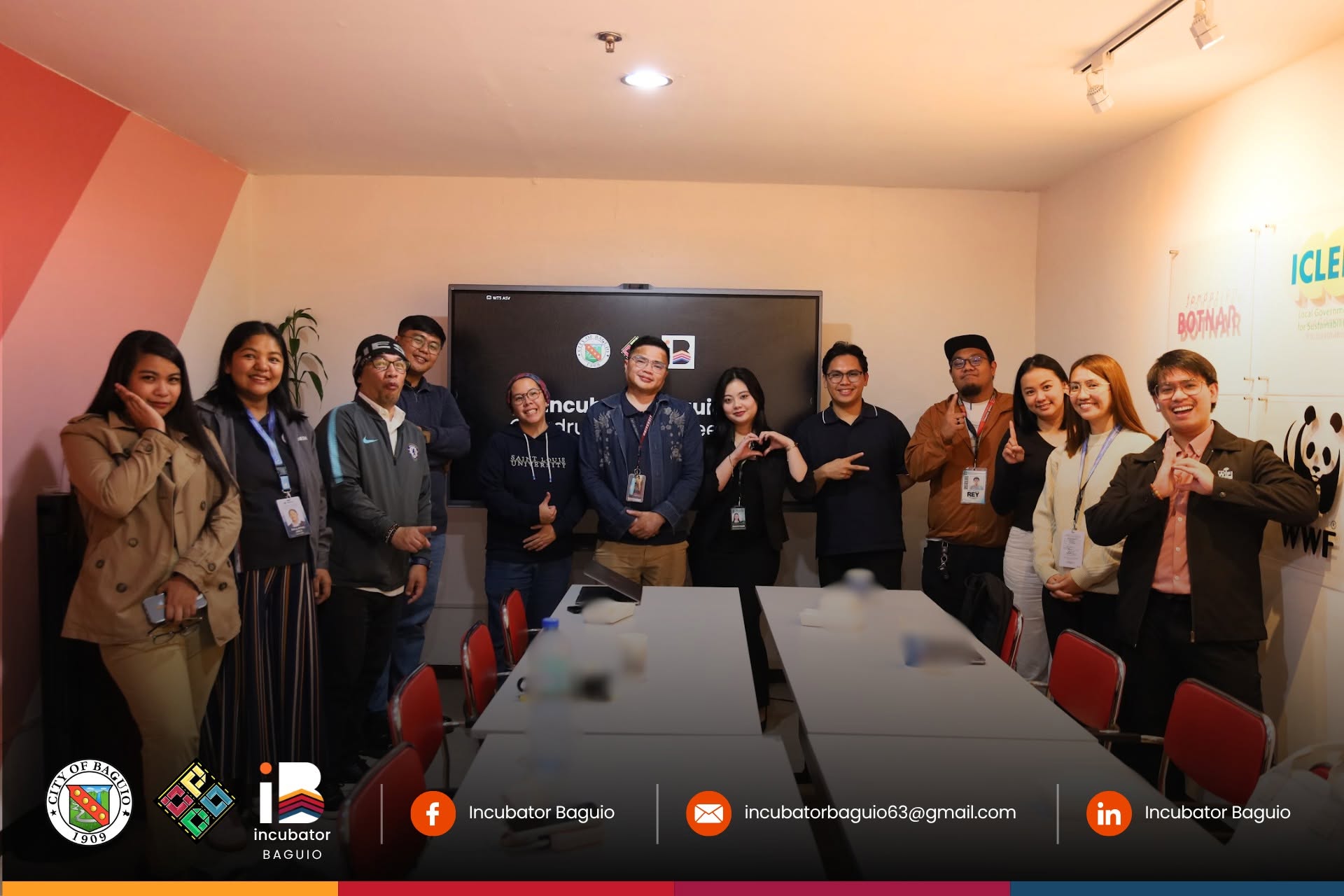
Incubator Baguio brought together representatives from government, academe, and other innovation institutions for a Quadruple Helix Ecosystem Meeting, exploring how collaboration, shared resources, and stronger connections can create better pathways for startups, researchers, MSMEs, students, and innovators in Baguio City.
 Featured
Amianan Ventures
Bringing Baguio’s Innovation Ecosystem to the Same Table
Building a strong startup ecosystem is not the work of one organization.
It requires universities that develop talent and research, government institutions that create enabling programs and policies, industry partners that understand market needs, and ecosystem organizations that help connect these different players.
On August 26, 2026, Incubator Baguio convened representatives from key institutions across the local innovation ecosystem for a Quadruple Helix Ecosystem Meeting at the SIGLAT Youth Innovation Hub, Baguio Convention and Cultural Center.
The meeting brought together representatives from DEPDev Cordillera, DOST-CAR, DICT-CAR, DepEd Baguio, the University of the Cordilleras Innovation and Technology Transfer Office, Saint Louis University ConRes TBI, University of the Philippines Baguio SILBI, and the University of Baguio.
The discussion centered on Incubator Baguio’s programs and initiatives, emerging opportunities within Baguio’s innovation ecosystem, and potential areas for collaboration.
Why Ecosystem Collaboration Matters
Startups rarely succeed because of a single program.
A founder may need technical expertise from a university, mentorship from an incubator, funding from an investor, market access through industry, and government support to navigate programs and opportunities.
These resources often exist, but they can be difficult to access when institutions operate separately.
This is where ecosystem collaboration becomes important.
The meeting provided an opportunity for participating institutions to share their perspectives, identify common interests, and explore how their respective expertise, networks, resources, and initiatives could complement one another.
The goal is not simply to create more programs.
It is to make existing capabilities more connected.
Moving From Individual Programs to a Connected Ecosystem
One of the challenges faced by emerging startup ecosystems is fragmentation.
Different organizations may already be supporting entrepreneurs, researchers, students, and MSMEs, but these efforts can sometimes operate within separate networks.
A founder may not know which institution can help with technology transfer.
A researcher may not know where to find commercialization support.
A student with a promising idea may not know where to find mentors.
An MSME may need technical assistance that exists within a university but has no clear pathway for accessing it.
Connecting these institutions can help create a clearer ecosystem pathway.
For example:
Idea → Research → Prototype → Validation → Incubation → Market → Growth
Different institutions can contribute at different stages.
The value comes from making those transitions easier.
The Role of the Quadruple Helix
The meeting’s focus on a Quadruple Helix approach reflects the importance of bringing multiple sectors into innovation.
While the exact roles of stakeholders can vary, the underlying principle is straightforward: innovation becomes stronger when government, academe, industry, and the broader community are connected.
Each brings a different perspective.
Government can help create policies, programs, infrastructure, and opportunities.
Academe contributes research, talent, technical expertise, and intellectual property.
Industry provides market knowledge, commercialization opportunities, and real-world challenges.
Communities and users help identify problems and determine whether proposed solutions actually create value.
For startups, these connections can provide access to resources that would otherwise take years to build independently.
Creating More Opportunities for Startups
For Baguio’s startup ecosystem, stronger institutional collaboration can create more opportunities for early-stage ventures.
Startups need more than funding.
They need customers.
They need mentors.
They need technical expertise.
They need talent.
They need partnerships.
They need opportunities to test their products.
They need environments where they can learn from failure and iterate.
An ecosystem can help reduce the distance between startups and these resources.
This is particularly important for early-stage founders who may have strong ideas but limited networks.
Universities as Innovation Partners
The participation of multiple higher education institutions also highlights the growing role of universities in regional innovation.
Universities are not only places where students earn degrees.
They are also sources of research, technology, talent, ideas, and potential entrepreneurs.
Technology transfer offices and university incubators can help move these assets beyond the classroom and laboratory.
For Baguio, stronger connections among institutions such as the University of the Cordilleras, Saint Louis University, University of the Philippines Baguio, and University of Baguio can create more opportunities for interdisciplinary collaboration and technology commercialization.
The goal is not necessarily to commercialize every research output.
Rather, promising ideas should have pathways to explore whether they can become useful technologies, social innovations, or sustainable ventures.
Connecting Research With Real Problems
One of the biggest opportunities in an innovation ecosystem is connecting research and technology with actual market and community needs.
Researchers may develop technologies with significant potential.
But potential does not automatically translate into adoption.
There needs to be a process for identifying users, validating needs, developing prototypes, testing solutions, and finding appropriate commercialization or adoption pathways.
This is where startups can become important.
Entrepreneurs can help translate research and technology into products and services that respond to specific market needs.
At the same time, startups can bring real-world problems back to universities and research institutions, creating opportunities for new research and collaboration.
This creates a two-way relationship between research and entrepreneurship.
The Opportunity for Baguio
Baguio already has many of the ingredients needed for a strong innovation ecosystem.
It has universities.
It has government institutions.
It has research organizations.
It has technology business incubators.
It has entrepreneurs and MSMEs.
It has students and young innovators.
It has industry partners.
The bigger opportunity is connecting these assets more effectively.
An ecosystem becomes valuable when an entrepreneur can move from one institution to another without feeling like they are starting from zero each time.
A researcher should be able to discover commercialization support.
A student should be able to find a pathway from an idea to a prototype.
An MSME should be able to access technology and expertise.
A startup should be able to find mentors, customers, partners, and investment opportunities.
That connectivity is what turns individual organizations into an ecosystem.
Incubator Baguio’s Role as an Ecosystem Connector
The meeting also reinforces the role of Incubator Baguio as a platform for connecting different players in the innovation ecosystem.
Rather than operating only as a support organization for individual startups, ecosystem coordination can help create relationships among founders, researchers, mentors, universities, government agencies, industry partners, investors, and other support organizations.
This can help identify opportunities that no single institution could develop on its own.
For example, a government challenge could connect with university researchers.
Researchers could connect with startups.
Startups could connect with industry partners.
Industry problems could become innovation challenges.
Students could become future founders.
These connections create possibilities for new innovation pathways.
Collaboration Should Lead to Action
Ecosystem meetings are valuable, but the real measure of success is what happens after the discussion.
Shared interests need to become concrete collaborations.
Connections need to become programs.
Programs need to create opportunities.
And opportunities need to reach the people the ecosystem is designed to support.
The next step for participating institutions is therefore not simply to continue talking about collaboration, but to identify specific areas where their capabilities can complement one another.
Even small collaborations can become building blocks for a stronger ecosystem.
Building a Pipeline for Northern Luzon Innovation
The importance of this work extends beyond Baguio.
As the center of a broader Cordillera innovation network, stronger collaboration in the city can contribute to a wider regional pipeline of innovators and entrepreneurs.
The long-term opportunity is to develop a system where promising ideas from students, researchers, MSMEs, and founders have clearer pathways toward development and real-world application.
That could mean:
Student idea → Innovation program → Prototype
Research output → Technology transfer → Startup
Community problem → Innovation challenge → Solution
MSME challenge → Technical support → Product innovation
Different pathways can lead to different outcomes.
Not every idea needs to become a startup.
Some may become research projects.
Others may become technologies adopted by communities.
Some may become new businesses.
The ecosystem’s role is to make these pathways possible.
Building Connections That Last
The August 26 meeting reflects a simple but important principle:
A strong innovation ecosystem is built through relationships.
Programs matter.
Infrastructure matters.
Funding matters.
But without connections between the people and institutions providing these resources, much of their potential remains untapped.
For Baguio, bringing government, academe, industry, and other ecosystem stakeholders into the same conversation creates an opportunity to build those connections intentionally.
The challenge now is to turn shared perspectives into shared action.
If that happens, the benefits can extend beyond individual organizations.
More innovators can find support.
More research can reach users.
More startups can access opportunities.
More MSMEs can innovate.
And more community problems can become opportunities for meaningful solutions.
Original Source
The source identified participating representatives from DEPDev Cordillera, DOST-CAR, DICT-CAR, DepEd Baguio, the University of the Cordilleras Innovation and Technology Transfer Office, Saint Louis University ConRes TBI, University of the Philippines Baguio SILBI, and the University of Baguio.
The discussion on startup ecosystem development, innovation pathways, and the potential role of institutional collaboration is editorial analysis based on the activities described and is not presented as a specific commitment by the participating organizations.
Market Context
For Baguio and the wider Cordillera region, ecosystem coordination can help connect existing resources across government, academe, industry, and other stakeholders.
The region already has universities, research institutions, incubators, government programs, entrepreneurs, and industry partners. The opportunity is to strengthen the connections among these players so that innovators and entrepreneurs have clearer pathways from ideas and research to validation, commercialization, and growth.
For the startup ecosystem, the most valuable outcome of collaboration is not simply having more programs. It is creating a system where the right founder, researcher, student, MSME, or innovator can more easily find the right person, institution, resource, or opportunity at the stage where they need it.
Are you a founder, innovator, or community builder in Northern Luzon?
We're always looking for compelling stories from the region's ecosystem. Whether you're launching a startup, running a program, or doing something interesting — we'd love to feature you.