
Mapping Ilocos Norte’s Startup Ecosystem: Identifying Gaps, Strengths, and Opportunities for Innovation
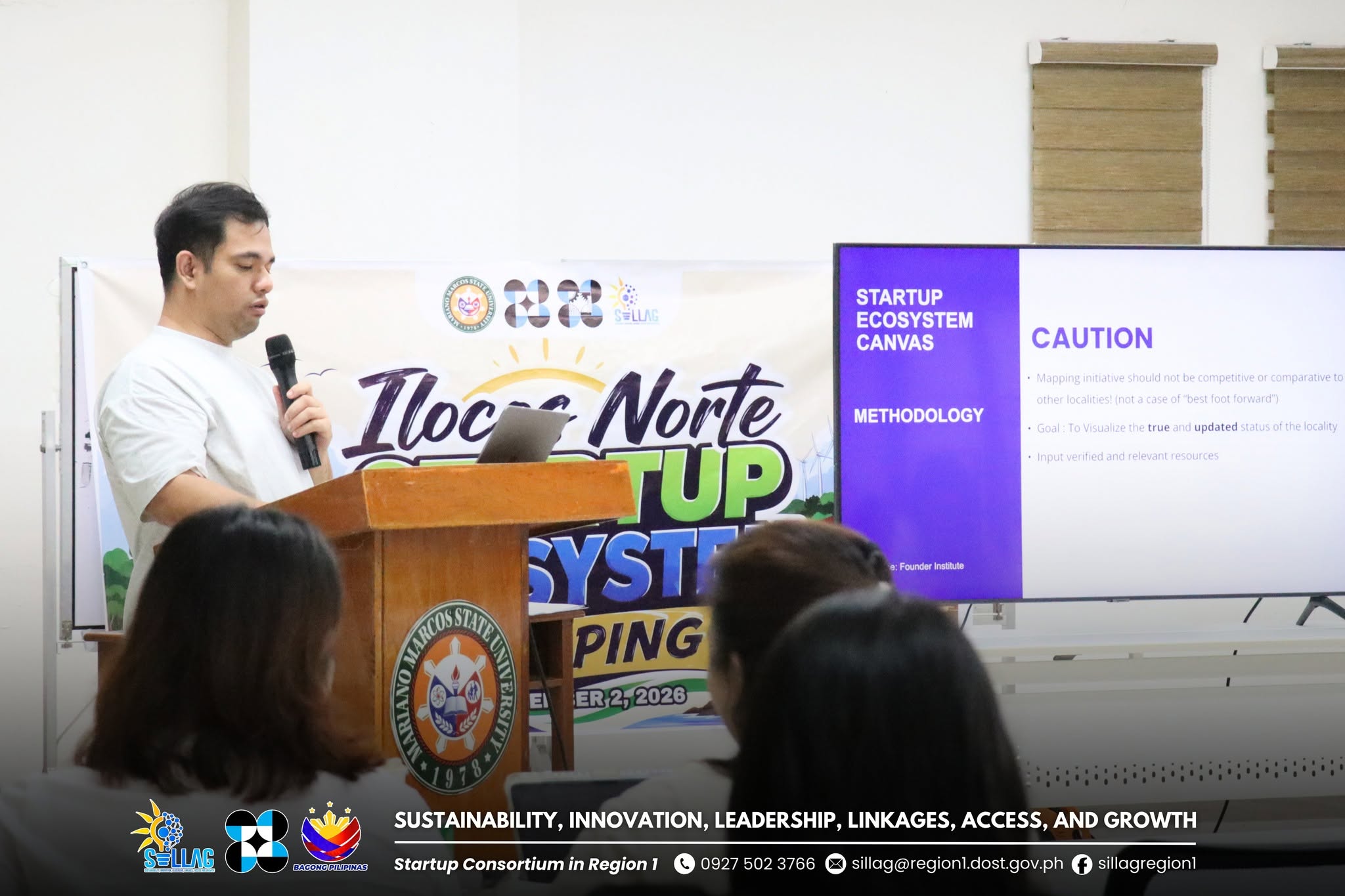
SILLAG Region 1 conducted a Provincial Startup Ecosystem Mapping in Ilocos Norte on September 2, bringing together 32 key informants to better understand the province’s startup landscape, identify ecosystem strengths and gaps, and explore opportunities to strengthen innovation, entrepreneurship, and startup development.
 Featured Partner
Inv8 Studio
Innovation Partner for Startups & Growing Businesses
Understanding the Ecosystem Before Building It
A strong startup ecosystem does not develop simply by creating more startup programs.
It requires an understanding of who is already in the ecosystem, what support exists, where the gaps are, and how different stakeholders can work together.
This is the purpose of the Provincial Startup Ecosystem Mapping conducted by SILLAG Region 1 in Ilocos Norte.
Held at Mariano Marcos State University (MMSU) in Batac City, the activity gathered 32 key informants representing different sectors of Ilocos Norte’s startup ecosystem.
Rather than looking at startups in isolation, ecosystem mapping looks at the broader environment that allows entrepreneurs and innovative ideas to develop.

From Stakeholders to an Ecosystem Map
The participation of different sectors is important because startups often depend on more than funding or business registration.
They may need access to:
Mentorship and technical expertise
Research and development
Incubation and acceleration
Funding and investment
Markets and industry connections
Talent and skills
Government support
Infrastructure and innovation facilities
Mapping these stakeholders can help reveal how these resources are currently connected—and where connections may still be missing.
For Ilocos Norte, the exercise can provide a clearer picture of the province’s existing innovation capacity and the opportunities to strengthen it.
Finding the Gaps Is Part of Innovation
One of the most valuable outcomes of ecosystem mapping is not simply identifying what already exists.
It is identifying what is missing.
For example, an ecosystem may have entrepreneurs and academic institutions but limited connections to investors. It may have promising technologies but insufficient support for commercialization. It may have innovation programs but limited pathways for startups to reach customers.
These gaps represent challenges, but they can also become opportunities for new programs, partnerships, and even startups that provide solutions to ecosystem needs.
This makes ecosystem mapping more than a documentation exercise. It can become a basis for deciding where intervention can create the greatest impact.
Learning From Ecosystem Practitioners
The activity featured Mr. Dave Del Rosario, a founding member of the Strategic and Collaborative Alliance for Leveraging Ecosystems of Startups – National Capital Region (SCALE-NCR), as resource person and facilitator.
Bringing ecosystem practitioners into the process can help stakeholders examine startup development from a broader perspective and consider how different parts of an ecosystem can work together.
The emphasis is not simply on producing more startups, but on creating the conditions that allow promising ventures to emerge, develop, and connect with the resources they need.
Why This Matters for Northern Luzon
Ilocos Norte is the first of four provinces in Region 1 to undergo the provincial startup ecosystem mapping.
Similar activities are set to follow in Ilocos Sur, La Union, and Pangasinan.
Taken together, these activities can provide a more comprehensive picture of Region 1’s startup landscape.
Each province has different institutions, industries, resources, entrepreneurs, and local challenges. Mapping them individually can help identify province-specific strengths while also revealing opportunities for regional collaboration.
This is particularly important for Northern Luzon, where startup development can benefit from stronger connections among universities, government agencies, businesses, investors, entrepreneurs, and support organizations.
From Mapping to Action
The real value of ecosystem mapping will ultimately depend on what happens after the map is created.
A useful ecosystem map should help stakeholders answer practical questions:
What strengths can we build on? What gaps need attention? Who can collaborate? What opportunities can be developed?
From there, stakeholders can move toward more targeted interventions, stronger partnerships, and better support pathways for entrepreneurs.
A simple progression is:
Map → Identify Gaps → Connect Stakeholders → Develop Interventions → Strengthen Startups
The mapping is therefore not the destination. It is a tool for making better ecosystem decisions.
The Bigger Opportunity for Ilocos Norte
For Ilocos Norte, understanding its startup ecosystem can help shift the conversation from individual entrepreneurial activities toward ecosystem development.
The province does not need to build everything from scratch.
It can identify what already works, connect existing resources, address gaps, and strengthen relationships among stakeholders.
That approach can make innovation support more coordinated—and potentially make it easier for promising ideas to move from ideation to validation, commercialization, and growth.
Original Source
Information for this article is based on the SILLAG Region 1 announcement regarding the Provincial Startup Ecosystem Mapping in Ilocos Norte, held on September 2, 2026, at Mariano Marcos State University in Batac City.
The source provided the details on the 32 key informants, the objectives of the mapping activity, Mr. Dave Del Rosario’s role as resource person and facilitator, and the planned mapping activities in Ilocos Sur, La Union, and Pangasinan.
The discussion on ecosystem gaps, startup opportunities, and potential pathways from mapping to action is editorial analysis based on the purpose of the activity.
Market Context
Startup ecosystem mapping is increasingly important as regions seek to build stronger innovation and entrepreneurship environments. For Region 1, conducting the activity across its four provinces can help create a clearer understanding of local capabilities and gaps while opening opportunities for greater regional collaboration.
For Northern Luzon, the larger opportunity is to move beyond isolated startup programs toward a more connected ecosystem where ideas, talent, research, capital, markets, and institutions can work together more effectively.
Are you a founder, innovator, or community builder in Northern Luzon?
We're always looking for compelling stories from the region's ecosystem. Whether you're launching a startup, running a program, or doing something interesting — we'd love to feature you.