
Cordinnovation 2026 Wraps in Baguio City With a Clear Message: The Cordillera's Innovation Ecosystem Is Being Built Together
DOST-CAR's regional innovation celebration concluded on April 30, 2026, with senior officials from CHED, DEPDev, and DOST underscoring AI, collaboration, and inclusive development as the pillars of the region's next chapter.
 Featured
Amianan Ventures
The Cordillera Administrative Region's biggest annual convergence of research, technology, and innovation formally closed on April 30, 2026, with partner institutions recognized and a unified call extended to all stakeholders: the work does not stop here.
Cordinnovation 2026, organized by the Regional Research, Development and Innovation Committee–CAR (RRDIC-CAR) under the chairmanship of DOST-CAR Regional Director Dr. Nancy A. Bantog, ran across two days at venues in Baguio City under the theme "AI for Growth in the Cordillera: Bridging Innovation and Development". It served as the region's celebration of the National Innovation Month, gathering higher education institutions, government agencies, researchers, startups, and local government units in one space to advance the region's collective innovation agenda.
What the Two Days Covered
The event opened on April 29 with an innovation forum centered on technology transfer and startup growth, held at the Paragon Hotel and Suites in Baguio City. The forum focused on how research outputs from Cordilleran universities and institutions can be converted into market-ready products and services — the persistent gap between the laboratory and the marketplace that every innovation ecosystem has to close. Discussions covered commercialization mechanisms, technology licensing, and the structures that make fair and viable transfer possible for both researchers and industry partners.
A parallel session addressed digital and smart innovations in tourism, bringing together policymakers, industry leaders, academics, and innovators under the theme "Synergizing for a New Tourism Ecosystem". The Cordillera's tourism sector — rich in cultural heritage, indigenous assets, and natural landscapes — was framed as a prime field for technology-driven reinvention, with digital tools offering new ways to manage visitor experience, destination marketing, and community-based enterprise.
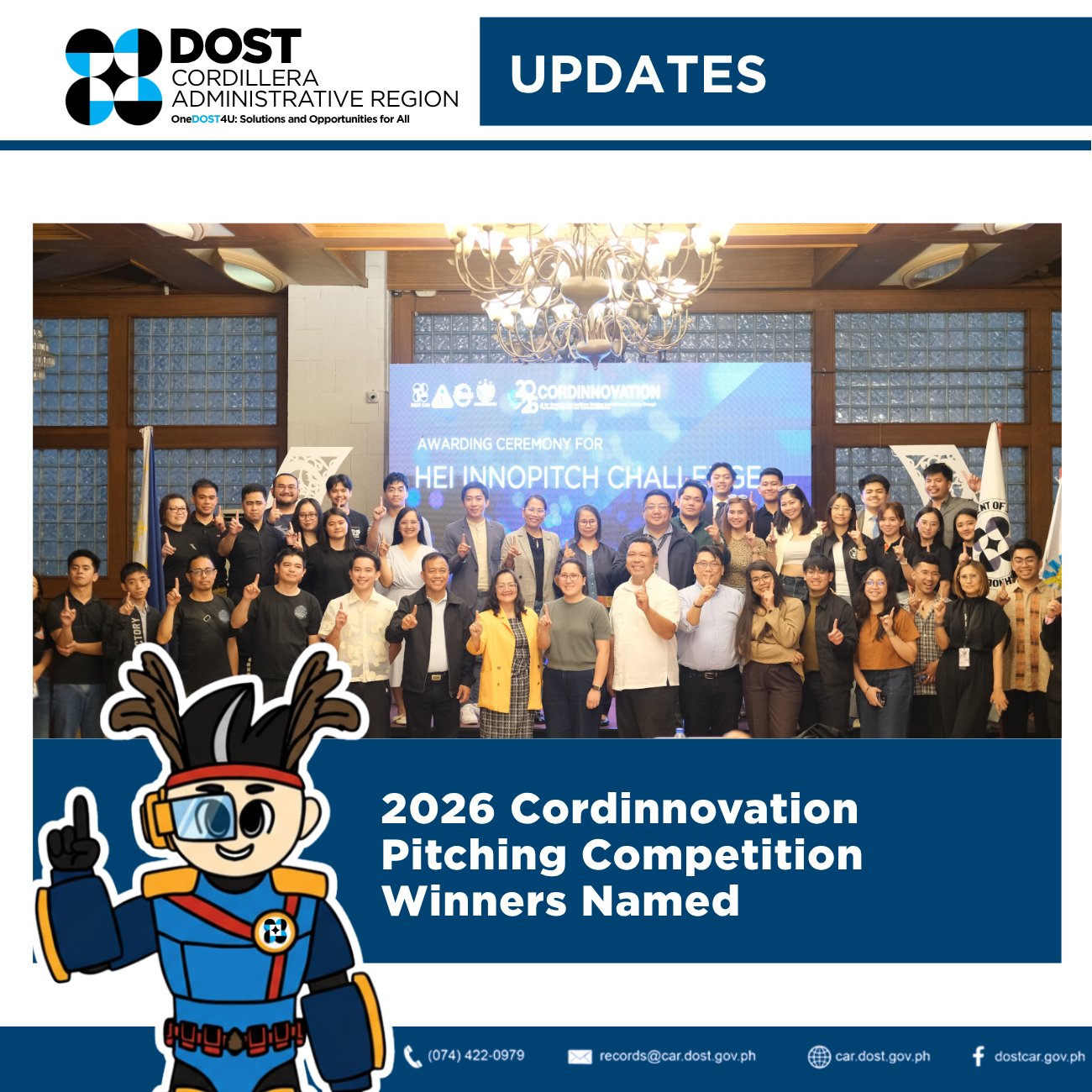
Day 2 on April 30 carried the closing programme, where partner institutions and individuals who contributed to the event's success were formally recognized.
What Officials Said at the Close
CHED-CAR OIC Dr. Serafin L. Ngohayon, representing higher education institutions across the region, reaffirmed the Commission's commitment to building a culture of innovation within Cordilleran universities. He pointed to the multiplier effect that comes when institutions stop working in silos. "In working together, we increase capacity and make things brighter," he said.
The closing message was delivered by DEPDev-CAR Regional Director Apollo Edwin S. Pagano, who also serves as Vice Chair of the RRDIC-CAR. His remarks centered on the event's central theme — AI — framed not as a passing technology trend but as a structural force. "Artificial intelligence is not merely a tool, but a transformative force shaping development and progress," Pagano said. He acknowledged Cordinnovation's participants and called for sustained collaboration to translate innovation momentum into inclusive regional development — growth that reaches not just Baguio City, but every province in the Cordillera Administrative Region.
Pagano also formally recognized DOST-CAR Regional Director Dr. Nancy A. Bantog and the RRDIC-CAR for the successful conduct of the event.
What It Signals for the Ecosystem
Cordinnovation is not a single-agency initiative. Its organizing body — the RRDIC-CAR — draws membership from DOST, CHED, DEPDev, DA, DTI, and partner state universities and colleges across CAR. The fact that senior officials from three separate national agencies delivered substantive remarks at the close of a regional innovation event is itself a signal: the Cordillera's research and innovation agenda is gaining cross-institutional weight.
For founders, startups, and ecosystem builders in the region, the conversations seeded at Cordinnovation 2026 — on technology transfer, AI adoption, digital tourism, and research commercialization — represent exactly the kind of institutional alignment that turns a regional innovation agenda from aspiration into infrastructure.
The initiative forms part of continuing efforts to advance innovation and support inclusive regional development in the Cordillera.
Are you a founder, innovator, or community builder in Northern Luzon?
We're always looking for compelling stories from the region's ecosystem. Whether you're launching a startup, running a program, or doing something interesting — we'd love to feature you.