
The Ilocos Region's Innovation Ecosystem Just Shifted Gears — From Planning to Full Implementation
The Ilocos Region's startup ecosystem consortium officially transitioned to its strategic implementation phase at a General Assembly on April 29, 2026 — with 52 participants from 25 offices, a restructured governance model, and a clear mandate to move from strategy to scaled impact.
 Featured
Amianan Ventures
There is a moment in every ecosystem initiative when the planning ends and the real work begins. For SILLAG Region 1, that moment arrived on April 29, 2026.
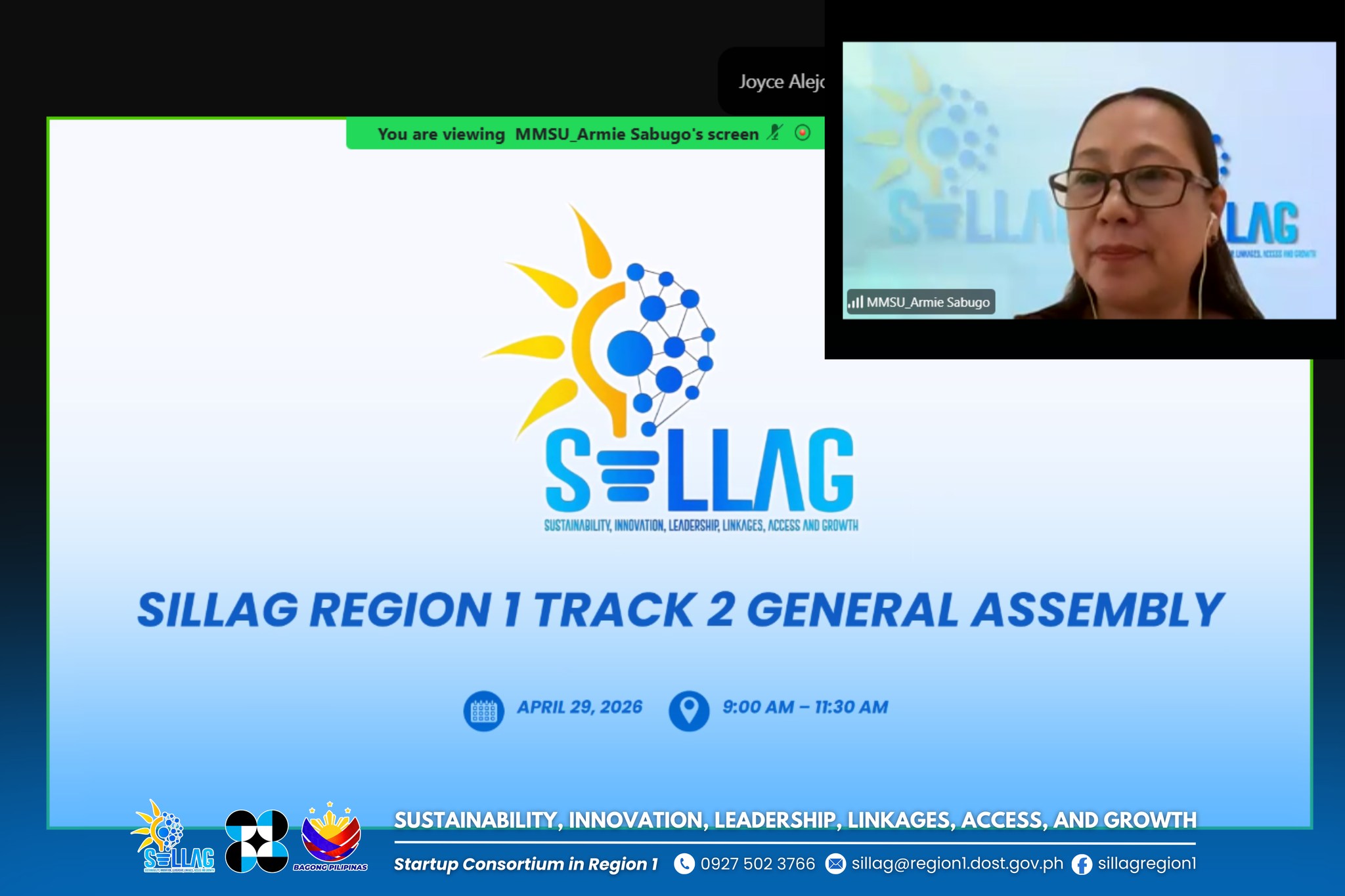
The Sustainability, Innovation, Leadership, Linkages, Access, and Growth Region 1 consortium held its Track 2 General Assembly virtually on that date, gathering 52 participants from 25 offices — national government agencies, local government units, academic institutions, private organizations, startup founders, and technology business incubators. The assembly marked the official transition from Track 1's strategic planning phase into Track 2: implementation and scaled impact.
What Track 1 Built and What Track 2 Demands
SILLAG Region 1 is part of the DOST One Science Cluster initiative — a national effort to build coordinated, province-level startup and innovation ecosystems outside Metro Manila. Track 1 was the foundation: mapping the ecosystem, identifying stakeholders, establishing governance frameworks, and building the institutional relationships needed to sustain coordinated action.
Track 2 is where that foundation gets used.
Engr. Arnold C. Santos, SILLAG Region 1 Project Leader, presented the Track 1 accomplishments and laid out the objectives and expected outputs for the implementation phase — a shift in focus toward execution, measurable results, and the commercialization of technologies developed within the region.
Dr. Teresita A. Tabaog, Chairperson of SILLAG Region 1 and Regional Director of DOST Ilocos Region, framed the transition clearly in her opening remarks. "As we enter Track 2, we move from strategic planning to implementation and scaled impact. Our focus now is to operationalize the ecosystem and ensure that the commercialization of regional technologies is equitable, sustainable, and inclusive."
That last word — inclusive — is the one that matters most in a regional ecosystem context. The risk in any technology commercialization effort is that benefits concentrate among institutions and individuals already well-positioned to capture them. SILLAG's explicit framing of equity and inclusivity as operating principles signals an awareness of that risk and a structural intention to counter it.
![May be an image of text that says 'Proposea Structure (TRACK 2) GOVERNING COUNCIL DOST Region1 (Cholrperson) MMSU(Co-Chalrperson) MMSU(C INNOVATIONA AND TECHNOLOGY DEVELOPMENT Management Team TALENT AND CAPACITY BUILDING PARTNERSHIPA AND ECOSYSTEM LINKAGES OOYBUSMNESSINCUBATOR BILINESSINCURATORI EOUCATION OFEDUCATION FINANCEA AND INVESTMENT 3pblMИwAЛH POLICY AND TECIONCALEDUCATIONANDSRILE CDMMIRCE ANDINDUSTRY SCENCE RIGIONIA W1ANGELINVESTORNNT TWORK CHEDD INCURATION DEFENSEANDSE DEFENSE AND SECURITY MEASURES DOST.D ALUMNINITWORKS SOVERNMENT AGENICIES (DCST, eT.a) LOCALGOVERVMENTUNITS ΣΡΝΤΜΙΡΟΙΚΙ NATIONAL BS/CENTERS VIL.DEFENSE 4.COMORTIN-MMERMR/SCS ND LOCAL BCALOOVERNMENT M UCATIONIMSTITUTIONE STATHUNVIRUTESAND.CGU NDCOLLRCES TRONCENTER SILLAG REGION1 1 21 Unmute 31°C Partly sunny မတြေတေပ ISILLAG_Nestor Nestor Panopio LLAG Startup Consortium nRegion] ငိဝိ SUSTAINABILITY, INNOVATION, LEADERSHIP, LINKAGES, ACCESS, AND GROWTH 0927 3766 AlCompanion AI silag@regionl.dost.gov.ph sillagregion1'](https://scontent.fmnl33-5.fna.fbcdn.net/v/t39.30808-6/682960968_122299677428036077_1843376753984189067_n.jpg?_nc_cat=102&ccb=1-7&_nc_sid=13d280&_nc_ohc=1gmFNge0yKYQ7kNvwEvTxdw&_nc_oc=Adq1EyExhuYfbGWDn2RuogwEmr680Osaf2Xvj0EpnGd3pLguq2_TcxhSLv9GG23-ED8&_nc_zt=23&_nc_ht=scontent.fmnl33-5.fna&_nc_gid=F2JUf4A9X1kc9CsbZHRrpw&_nc_ss=7b2a8&oh=00_Af4RRuuqALGzzVL4ceCtTxg1OoQMzow9LNtVnPOXvrteug&oe=69FF9D0D)
A New Governance Structure for a New Phase
Moving from planning to implementation requires more than intent. It requires accountability structures that can carry the weight of actual execution. Mr. Nestor Feland B. Panopio, SILLAG Region 1 Management Team Member, presented a proposed reorganization of the consortium designed specifically for the demands of Track 2.
The new structure introduces a Governing Council and a Management Team, supported by functional pillars covering innovation, partnerships, capacity-building, investment mobilization, and defense and security. Each pillar addresses a distinct dimension of what it takes to build a regional ecosystem that functions beyond the life of a single programme cycle — moving from a project with a timeline to an institution with continuity.
Prof. Armie C. Sabugo, SILLAG Region 1 Co-Implementor, presented the Calendar of Activities that will guide the consortium's engagement plan through the implementation phase, translating the governance restructuring into a sequenced set of actions.
What the Numbers Say About the Ecosystem
Fifty-two participants from 25 offices at a virtual general assembly is not a ceremonial headcount. It reflects the breadth of stakeholders that SILLAG Region 1 has brought into alignment — a cross-sector coalition that spans the full range of actors needed to make a regional innovation ecosystem function: government to provide policy and resources, academia to supply research and talent, private sector to validate and scale, and TBIs to bridge the gap between the two.
Engr. Santos closed the assembly with a message that captured what that coalition represents. "We have made significant progress in strengthening governance and expanding partnerships. More importantly, we have built a community that is willing to work together, share resources, and move forward as one ecosystem."
That community — not the governance structure, not the calendar, not the funding pipeline — is the durable asset. Structures can be reorganized. Calendars can shift. But a coalition of 25 institutions that has committed to working as one ecosystem is the foundation that makes everything else possible.
What It Means for Northern Luzon's Broader Ecosystem Story
SILLAG Region 1 covers the Ilocos Region — Ilocos Norte, Ilocos Sur, La Union, and Pangasinan — the western coastal belt of Northern Luzon that connects Baguio and the Cordillera to the northernmost provinces of the island. Its transition to Track 2 sits alongside parallel developments across the broader region: SINAG Cagayan Valley's five-year roadmap from Tuguegarao, Cordinnovation 2026's AI-focused convening in Baguio, and DOST's expanding iHub infrastructure across Luzon.
The picture that emerges is not a series of isolated programmes. It is a region in the process of building coordinated innovation infrastructure — province by province, ecosystem by ecosystem — that is starting to function as a whole.
SILLAG Region 1's move to implementation is one more piece of that picture locking into place.
Are you a founder, innovator, or community builder in Northern Luzon?
We're always looking for compelling stories from the region's ecosystem. Whether you're launching a startup, running a program, or doing something interesting — we'd love to feature you.