
She Built SPC Juice to Help Her Cousin. Her Cousin Did Not Live to See How Far It Has Come.
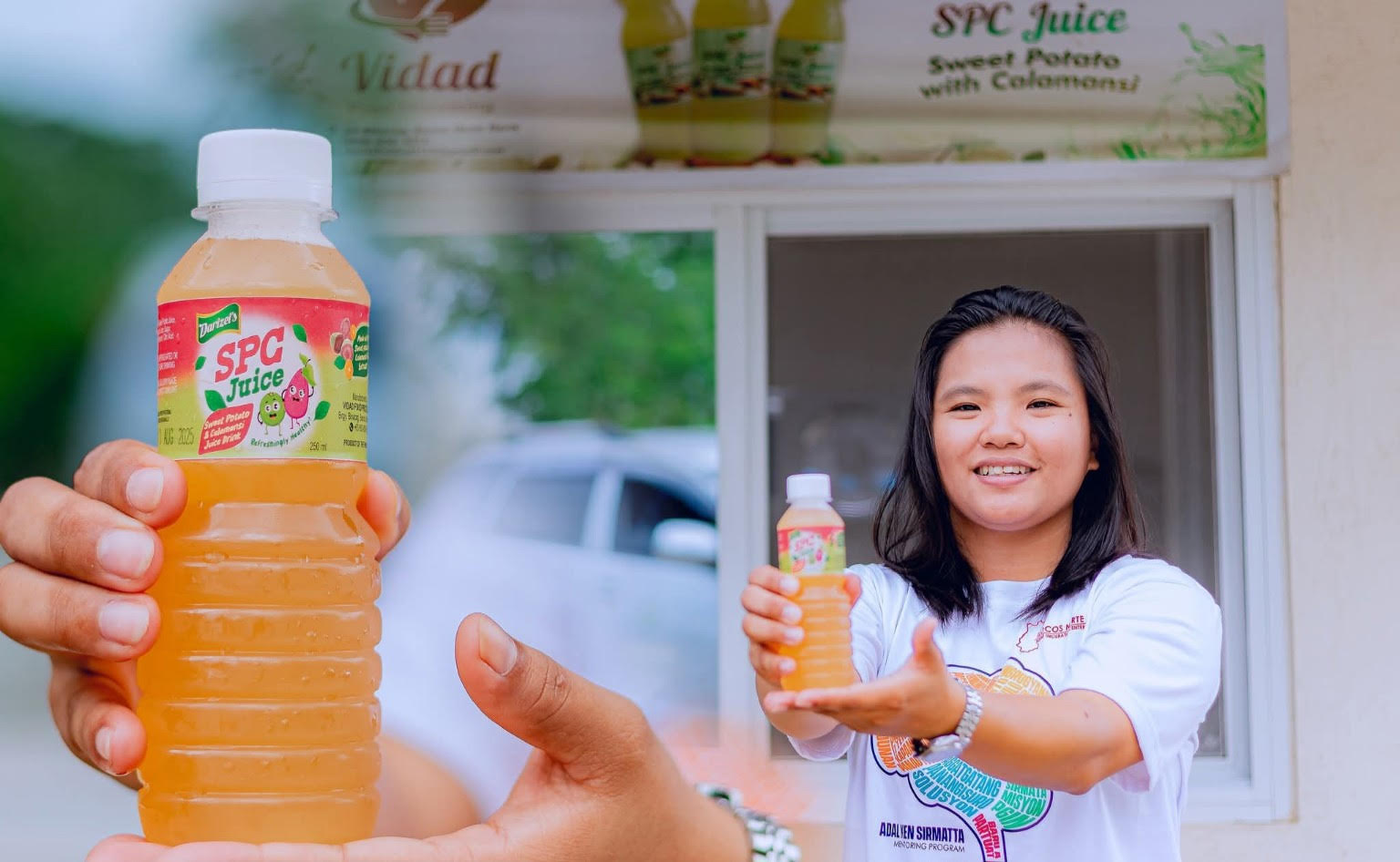
The founder of Vidad Food Processing, Darizel C. Vidad of Brgy. Binacag, Banna, Ilocos Norte, developed a sweet potato with calamansi juice from a college feasibility study, transforming it from a product with a 2-day shelf life to one with a 2-month shelf life at room temperature and up to 5 months when refrigerated, into an FDA-eLTO-approved food enterprise, and representing Region 1 at the National Young Farmers Challenge Season 5 in April 2026. The people who inspired her most did not make it to that stage, but she kept going anyway.
 Featured
Amianan Ventures
She Built SPC Juice to Solve a Real Problem in Her Community
The idea for SPC Juice did not come from a trend or a market report. It started from a real problem she witnessed, both within her family and in her community.
One of the people closest to her, her cousin, could not stop drinking soft drinks and was already experiencing health problems caused by this daily habit. Seeing this made the problem more real and urgent for her.
At the time, Darizel C. Vidad was a BS Agribusiness student working on a feasibility study, searching for a product that could address real-life challenges. The connection was immediate.
What if there was a healthier beverage alternative made from locally available crops that were often undervalued?
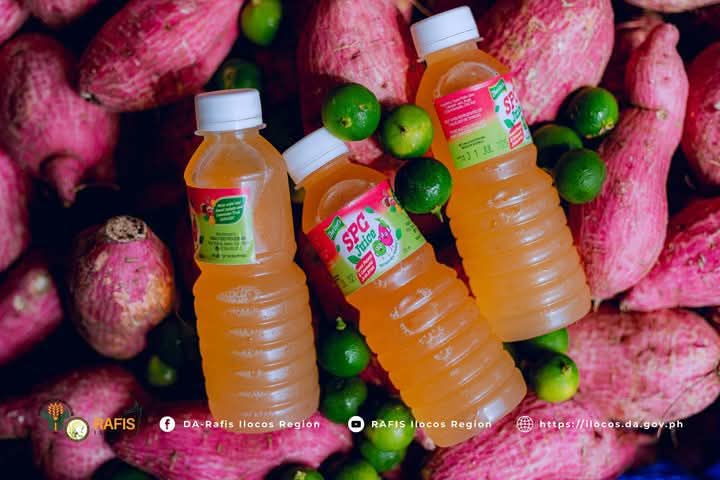
Sweet potato was widely available in Ilocos Norte, yet it was mostly processed only into chips. At the same time, calamansi-based beverages and innovations were very limited in the local market. These gaps led her to develop SPC Juice, a sweet potato and calamansi drink designed to be healthier, locally sourced, and supportive of farmers.
Her cousin became one of the first people to try the product. He appreciated it. He did not live to see how far it would go.

The Problem She Set Out to Solve
The mission of Vidad Food Processing has always been clear: to promote healthier beverage options for Filipino consumers while creating additional income opportunities for local farmers through sustainable, locally sourced production.
This dual purpose places the enterprise at the intersection of health and agriculture. Instead of focusing on only one sector, SPC Juice was designed to serve both, improving consumer wellness while building demand for sweet potato and calamansi produced by local farmers.
"I also want to show that agricultural products can be transformed into innovative and marketable food products that can compete in the market while promoting health, sustainability, and local agriculture," the founder shares.
What She Built From a Feasibility Study
Today, Vidad Food Processing is no longer just a student output. It is a growing enterprise with an FDA-eLTO approved operation, its own calamansi farm for raw material supply, and a product line led by SPC Juice, along with value-added products such as kamote jam and ice candy.
The route from college classroom to a functioning food enterprise ran through MMSU-ATBI, the Agri-Aqua Technology Business Incubator at Mariano Marcos State University, where the founder was connected after her department chair, Professor Ethel Reynda Calivoso, recognized the product's potential and her need for structured support.
Through MMSU-ATBI, she accessed product development support and opportunities that took SPC Juice from local markets to national trade fairs and, eventually, to the attention of international buyers.
SPC Juice has been introduced to schools, stores, cooperatives, and local markets across Ilocos Norte. It has reached nationwide markets through trade fairs and government-supported entrepreneurship events. In April 2026, the founder represented Region 1 at the National Young Farmers Challenge Season 5, held from April 19 to 24 in Iloilo City, after first being recognized as a provincial awardee, then a regional awardee, before reaching the national stage.
Through the Young Farmers Challenge Program, Darizel received a total of PhP 530,000 in grants across three stages: a Provincial Start-up Grant of PhP 80,000, a Regional Start-up Grant of PhP 150,000, and a Regional Upscale Grant of PhP 300,000. These grants directly funded the growth of Vidad Food Processing from a local product into a nationally recognized enterprise, and they represent exactly the kind of support the program is designed to provide to young agricultural entrepreneurs who are serious about building.
The Shelf Life Problem and the House-to-House Days
The earliest version of SPC Juice lasted only 2 to 3 days. That is not a market. That is a sample.
"How can I market and grow this product if it only lasts this long?" the founder kept asking herself.
The MMSU-ATBI connection provided the technical pathway to improve the product, but the challenge shaped her approach: identify the constraint, find the right support, and move forward.
Introducing a completely new product to a market that had no reference point was another challenge. Her approach was not digital-first or event-driven. It was door-to-door, under the heat of Ilocos Norte, personally explaining what SPC Juice was, offering samples, and building trust from zero.
"There were moments when I experienced difficulties and failures, but I never gave up because I believed that this innovative Sweet Potato with Calamansi Juice deserved to be known by more Filipinos."
The Losses That Made Her Work Harder
The hardest part of this story is not the shelf life problem or the door-to-door days.
Her cousin, the one whose health inspired the product, passed away during the same year she achieved provincial and regional recognition in the Young Farmers Challenge. He was one of the first people who tasted SPC Juice and believed in it, but he did not see the regional recognition or the national stage.
In 2025, her grandfather, who was deeply proud of her journey, also passed away. Shortly after, another close cousin died unexpectedly.
"There were moments when I questioned why these things were happening, but I continue to trust God and believe that everything has a purpose. Instead of giving up, these experiences motivated me to work even harder because I know our product can still help many people."
That is not just resilience as a startup story. It is a young entrepreneur carrying real loss and choosing to move forward with purpose.
What She Is Building Toward
In the coming months, Darizel plans to focus on product improvement, stronger branding, expanded market reach, and deeper partnerships that can bring SPC Juice beyond Ilocos Norte. With her calamansi farm supporting raw material supply and her FDA-eLTO approved operations ensuring compliance and quality, she is preparing for sustainable growth. More than business expansion, her goal is to inspire more young people to see agriculture as a space for innovation.
"I would like to share that agriculture and food innovation have strong potential for growth, and I hope more young people will be inspired to turn local resources into meaningful and sustainable businesses that can help our communities."
Her advice to every young founder in the region comes from someone who started with a college assignment, lost the people who mattered most during the hardest parts of the build, and kept going anyway:
"Start small, stay consistent, and do not be afraid of failures and challenges because they are part of the journey. Believe in your idea and continue improving it step by step. Stay grounded, listen to feedback, and build genuine relationships with people who support your journey. Most importantly, never stop learning and always remember your purpose for starting."
SPC Juice is available at schools, stores, cooperatives, and local markets in Ilocos Norte, and through trade fairs and government-supported market access programmes. For inquiries and partnerships, reach out directly.
What Builders Can Learn From the Founder of Vidad Food Processing
Lesson 1 — A real problem you can see is worth more than a market opportunity you read about.
The founder of Vidad Food Processing did not identify a gap in the functional beverage market through competitive analysis. She watched someone she loved get sick from a daily habit that had no healthy alternative in their immediate environment. That personal, visible, emotionally real problem became the brief. It also became the fuel. When the shelf life was only two days and the doors were closing, the memory of why the product existed kept her moving forward. Founders who start from genuine problems they have witnessed firsthand carry a resilience that founders who start from market sizing reports often do not. The problem is not abstract. It has a face. That makes it harder to walk away from.
The lesson: The closer your problem is to your own life and community, the harder it is to quit when the early stages get difficult. Start with problems you can see, not just problems you can model.
Lesson 2 — Your first constraint is your first product development brief.
A juice with a two to three day shelf life is not a product. It is a prototype with a critical failure point. Most founders in that position either pivot away from the product or stall indefinitely. The Vidad Food Processing founder did neither. She treated the shelf life problem as the first engineering challenge to solve, found the institutional resource that could help her solve it, and moved forward only when the product could actually function in the market. That discipline, defining the minimum viable product not as the smallest feature set but as the version that actually works for the customer, is what separated a promising college project from a running enterprise.
The lesson: Identify the single constraint that makes your product unviable and solve that first. Everything else is secondary until the core product works. Ship the version that functions, not the version that impresses.
Lesson 3 — Institutions exist to be used. Find them early and use them fully.
The Vidad Food Processing founder did not build her supply chain, her processing facility, her market access, and her competitive recognition alone. She found MMSU-ATBI through a mentor who recognized what she needed and made the introduction. From there, SETUP support, government trade fair access, and the Young Farmers Challenge programme each opened a door that would have taken years to find independently. The lesson is not that founders need government support to succeed. The lesson is that in regions like Northern Luzon, where ecosystem infrastructure exists but is not always visible, the founders who grow fastest are the ones who actively seek out the programmes, mentors, and institutions available to them rather than building in isolation.
The lesson: The support infrastructure in your region is more substantial than it looks from the outside. Your job is to know it exists, knock on the door, and show up prepared to use what is offered.
Acknowledgement
The founder would like to recognize the vital support of the following institutions: the Department of Agriculture Regional Field Office 1, Department of Agriculture – Agribusiness and Marketing Assistance Division (DA-AMAD), Department of Agriculture – Agribusiness and Marketing Assistance Service (DA-AMAS), Department of Agribusiness of MMSU, MMSU Agri-Aqua Technology Business Incubator, DTI Ilocos Norte, Office of the Provincial Agriculture (OPAG), LGU-BANNA, LGU-MAO, BANNA 4-H CLUB and other government programs that played a major role in turning her idea into a functioning enterprise.
Are you a founder, innovator, or community builder in Northern Luzon?
We're always looking for compelling stories from the region's ecosystem. Whether you're launching a startup, running a program, or doing something interesting — we'd love to feature you.