
She Planted Cacao During the Pandemic With No Plan and No Guarantee. Five Years Later, She Left a 26-Year Corporate Career to Go All In.
Judy Oracion Baucas of Tsokolat OLY Food Products planted her first cacao trees during the uncertainty of the pandemic with nothing but land, time, and faith. Those trees are now the foundation of a tree-to-bar chocolate enterprise producing tablea, cacao tea, and unadulterated chocolate bars, and on June 1, 2026, she took early retirement after 26 years in corporate to build it full time.

 Featured
Amianan Ventures
In the middle of 2020, when the world had stopped and nobody knew when it would start again, Judy Oracion Baucas did the one thing she could think of that made sense. She decided to plant.
No market research. No business plan. No investors. Just a piece of land, time that the pandemic had suddenly made available, and a decision that felt less like a strategy and more like an act of faith. Her husband took on the planting logistics, turning that decision into physical reality on the ground.
"We didn't know yet what would happen," she says. "But we have a land, time, and faith. So we planted cacao even in uncertainty."
That decision, made in fear and with zero guarantee of any return, is now the origin story of Tsokolat OLY Food Products, a tree-to-bar chocolate enterprise that produces unadulterated chocolate bars, tablea, cacao tea, and a growing line of cacao products. And on June 1, 2026, after 26 years in a corporate career, Judy took early retirement to go full time into the trees her family planted when everything else was falling apart.
The Pandemic Taught Her Something Most Business Plans Miss
The problem Tsokolat OLY is solving is not a market opportunity in the conventional sense. It is a lesson Judy absorbed the hard way during the most disruptive period most Filipinos have lived through.
"Pandemic taught us: if we don't grow it ourselves, we're always at risk."
That is a food security insight, a supply chain insight, and a livelihood insight all in one sentence. When external systems fail, the people with roots in the ground are the ones who can still feed themselves and their communities. Cacao farming, for Judy, was not a pivot into agriculture for profit. It was a response to a revelation about vulnerability, about what happens to families and communities when they are entirely dependent on supply chains they do not control.
That framing makes Tsokolat OLY something more than a chocolate business. It is a case for local food production as a form of resilience, and the product line is the most direct expression of that argument available.
Tree to Bar. No Filters. No Shortcuts.
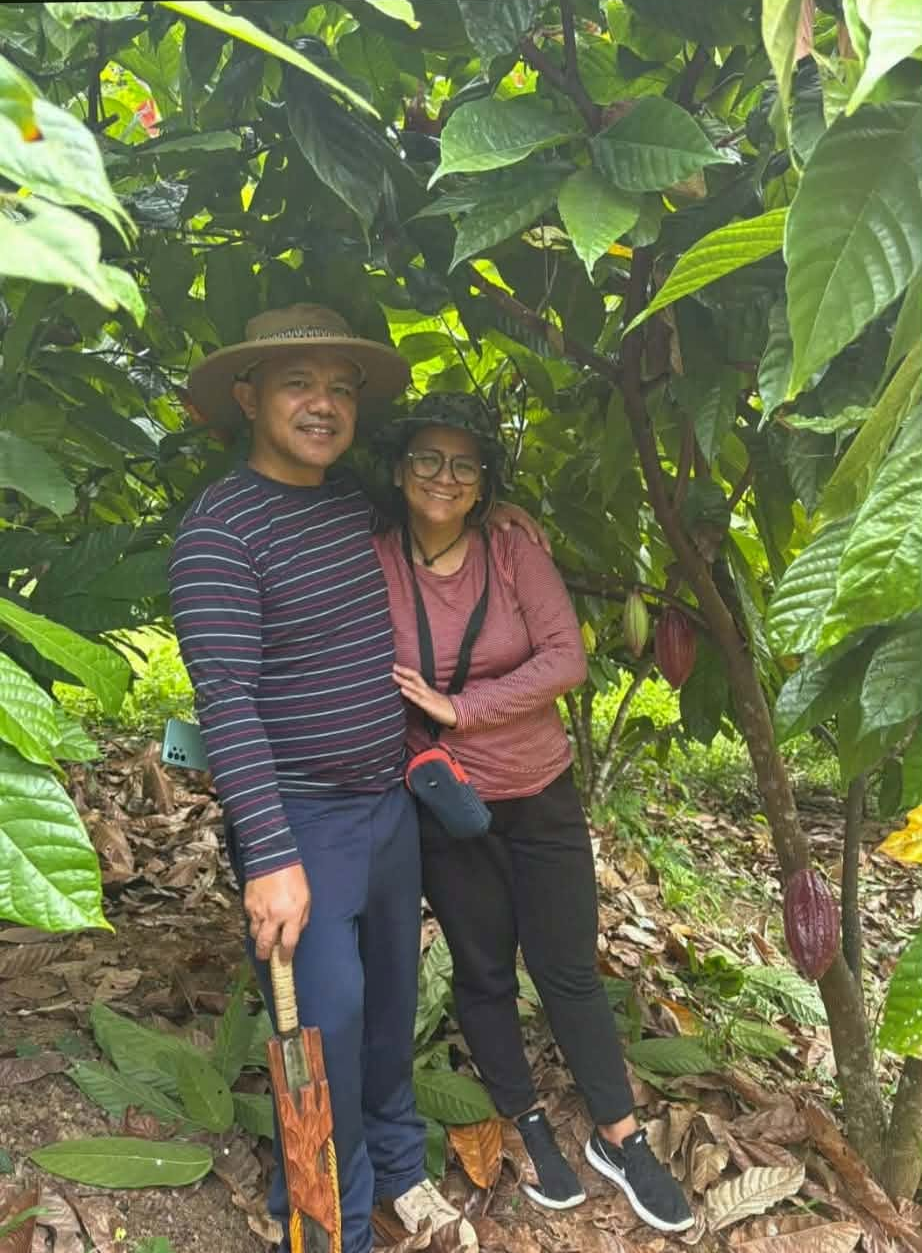
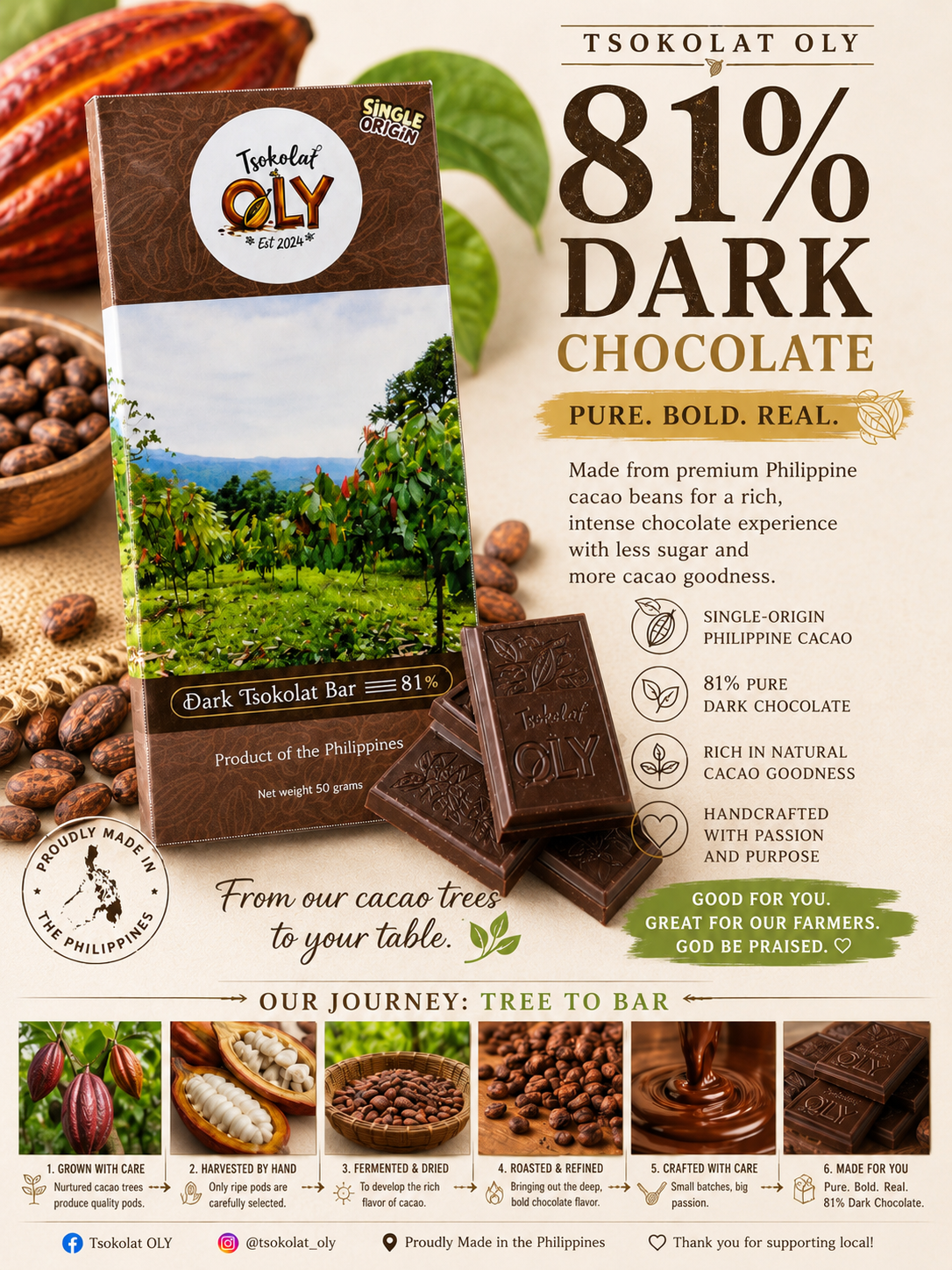
Tsokolat OLY does not buy cacao. It grows it. The entire production process, from harvesting pods to fermenting, drying, roasting, grinding, tempering, and molding, is handled by Judy and her operation. The phrase "tree to bar" is not a marketing claim. It is a literal description of how every product is made.
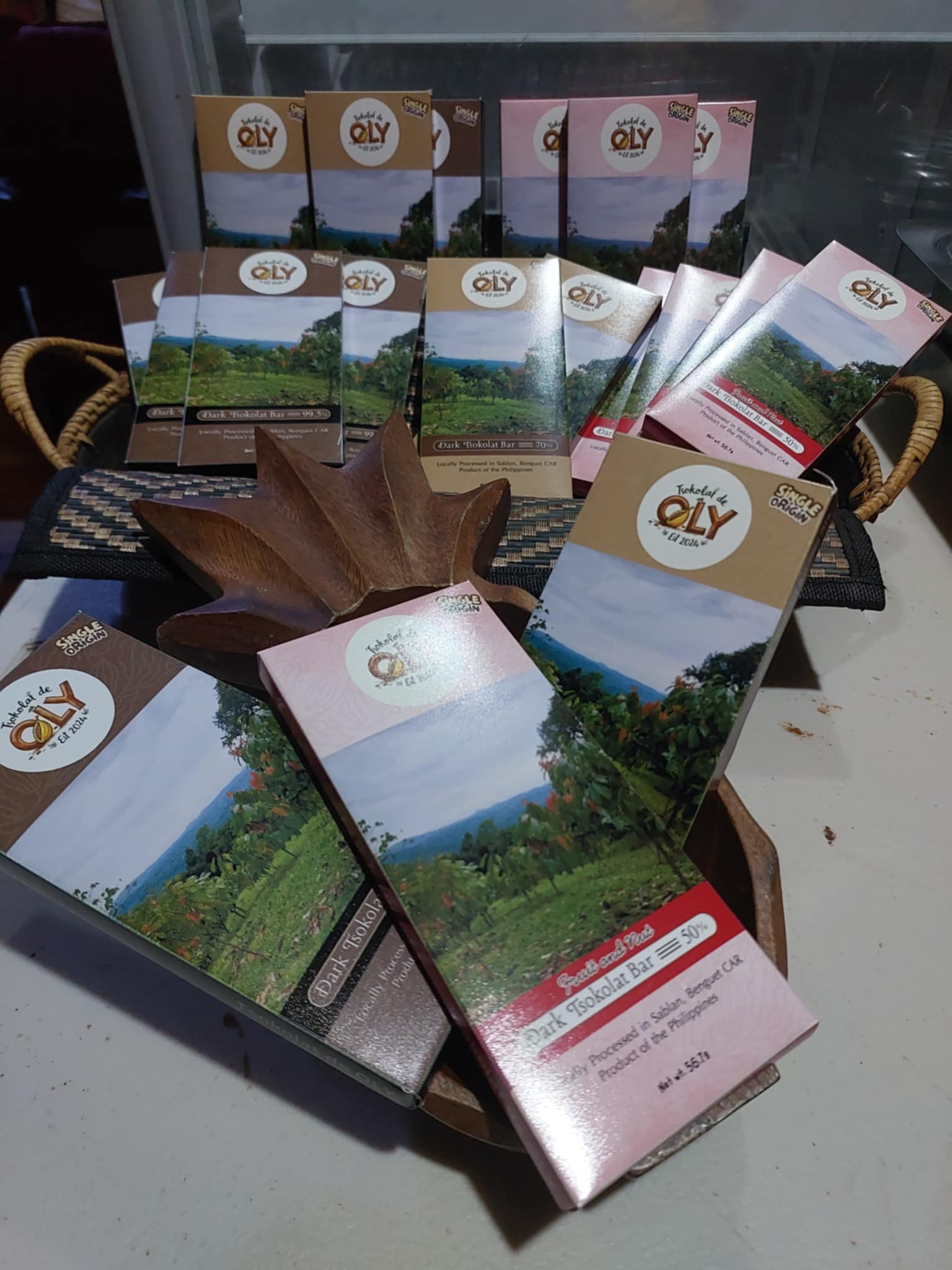
The product line currently includes chocolate bars, tablea, and cacao tea. None of them are adulterated. No fillers, no shortcuts, no compromise on the integrity of the cacao itself. That commitment to unadulterated production is both a quality standard and a philosophy: if you planted these trees with your own hands, you do not cut corners in what you make from them.
The products taste different from imported chocolate bars. Judy is direct about this. "Tsokolat OLY tastes different. It takes tasting and story." That is an honest acknowledgment that the market for genuinely local, genuinely unadulterated tree-to-bar chocolate requires customer education alongside customer acquisition. The taste is not what mass-market chocolate has trained most consumers to expect. It is better, in the way that real food is better than processed food, but the gap between what customers expect and what they experience has to be crossed one tasting at a time.
What Five Years of Building Looks Like
The journey from pandemic planting to a functioning tree-to-bar operation is not a short one. Cacao trees take years before they produce a real harvest. Every year between planting and first viable harvest is a year of investment without return, maintained on faith and on the long-term conviction that the trees will eventually justify the wait.
Judy has spent those years building knowledge alongside the trees. She now commands the full production process: harvesting, fermentation timing, drying protocols, roasting profiles, grinding techniques, tempering, and molding. The knowledge of how to take a cacao pod and turn it into a finished chocolate bar is not something that can be outsourced. It has to be learned by doing, batch by batch, mistake by mistake, improvement by improvement.
That work has always been a family effort. Her husband led the planting logistics from the start. Today, Judy manages the farm operations alongside him and her brother-in-law, a team built not from a hiring process but from the people who were already there when the first seeds went into the ground.
She has also built something that does not show up in production equipment inventories. She has built a story. Customers who know the Tsokolat OLY origin, the pandemic planting, the early retirement, the 26-year corporate career traded for early morning mold sessions and cacao harvests, connect to the product in a way that no advertising budget can manufacture. The story is the brand, and the brand is true.
"I worked for 26 years in corporate," Judy says plainly. "I just took early retirement effective June 1, 2026, to go full-time cacao."
That sentence carries more weight than most elevator pitches. Twenty-six years of professional stability, traded for a small startup with big roots and no guarantee of commercial success. The decision is not reckless. It is the result of five years of watching cacao trees grow from seedlings planted in fear into producing plants that have already validated the core premise. The trees proved it was real. The retirement made it permanent.
The Honest Challenges
Judy does not minimize the difficulties of what she is building.
Cacao requires patience at a scale that most businesses do not. The production timeline from planting to first real harvest is measured in years, not quarters. For a startup founder used to the pace of corporate project management, learning to operate on agricultural time is a different kind of discipline.
Capital and equipment remain the binding constraint. A full production line requires grinders, melanger machines, and a commercial roaster capable of consistent output without sacrificing quality. The current setup is a small kitchen operation. The next stage requires investment in machinery that the business is not yet generating enough revenue to self-fund. That is the gap Judy is working to close over the next six to twelve months.
The third challenge is the most patient work of all: shifting the customer mindset toward valuing local over imported and accepting that genuinely healthy, unadulterated chocolate is not going to be priced like a mass-market bar. "Healthy isn't cheap," Judy says. This is true, and it is a conversation that requires education, sampling, and the repeated reinforcement that what you are paying for in a Tsokolat OLY bar is not just chocolate but the full chain of decisions that went into growing, harvesting, and processing it without shortcuts.
What Keeps Her Going
The answer is the trees themselves.
"Those cacao trees were planted in fear and uncertainty. Zero guarantee. Now they're growing. They're proof that 'start even when you're not ready' works."
Every new pod on a branch that was a seedling during the lockdown is evidence of a thesis that most people would have called naive in 2020. Every molded bar that comes out of the tempering process is a return on an investment made in faith before any of the commercial logic was established.
Judy is also building with a horizon that extends beyond her own career. "Retirement could have been rest, but rest without purpose feels empty. OLY gives me a reason to wake up early: to mold, to teach, and to build something that outlives me. I started it to make meaning."
That framing, building something that outlives her, is the perspective of someone who has already had a long and successful professional life and has chosen to spend the second chapter of it on something with deeper roots than a quarterly performance review. It is a different kind of entrepreneurial motivation than the ones most startup narratives center, and it is worth taking seriously. Some of the most durable enterprises are built by people who are not primarily building for exit or for scale but for legacy.
What She Tells Other Founders
Judy's advice to aspiring founders in the region is as direct as her origin story.
"Start with what you have, not what you lack. We had a land and time, so we planted cacao."
That reframe is powerful. Most people inventory what they do not have and use the list as a reason to wait. Judy inverted the question. What do I have right now, today, that I can start with? The answer was a piece of land and time that the pandemic had unexpectedly provided. The business grew from there.
"Your story is your marketing budget. People buy because they connect to your stories more than the fancy ads."
For an enterprise that cannot yet afford a commercial marketing campaign, this is not consolation. It is strategy. The Tsokolat OLY story, pandemic planting, 26-year corporate career, early retirement into cacao, tree-to-bar production with no shortcuts, is more compelling than most advertising copy ever manages to be. It is true, it is specific, and it connects to values that an increasing number of consumers are actively looking for in what they buy.
"Learn but don't copy. Adapt to what the market in the region has. Walk around the area, talk to a few customers before you spend big."
And finally: "The region needs more builders, not more critics."
That last line is a challenge and an invitation simultaneously. Northern Luzon has people with land, with traditional knowledge, with agricultural resources, and with the time and motivation to build something meaningful from those foundations. The constraint is not the raw material. It is the decision to start.
Judy Oracion Baucas started in uncertainty, in the middle of a pandemic, with cacao seedlings and a piece of ground. Her husband planted them. Her brother-in-law helps tend them. Five years later, she planted her retirement in the same soil.
Watch her grow it.
Key Takeaways
Start with what you have. The Tsokolat OLY origin is a direct refutation of the most common reason people give for not starting: I don't have enough. Judy had land and time. That was enough to begin.
Agricultural time teaches business patience. Cacao is a years-long investment before it produces a real harvest. Founders in agri-based enterprises need to build their capital runway and their personal resilience for timelines that quarterly business models cannot accommodate.
Story is a structural competitive advantage for small enterprises. Tsokolat OLY's origin narrative is not supplementary to the business. It is the brand's most powerful differentiator. Customers who know the story buy differently than customers who are just comparing price per bar.
Tree-to-bar is a quality moat. Controlling the entire production process, from growing to finished product, is both a quality guarantee and a knowledge investment that takes years to build and is very difficult for competitors to replicate quickly.
Retirement with purpose is a startup founding model worth naming. Judy's decision to take early retirement from a 26-year corporate career to build Tsokolat OLY full time is a path that more experienced professionals in Northern Luzon can follow. Skills, networks, savings, and patience built in a corporate career are valuable startup assets.
Local food production is resilience infrastructure. The pandemic revealed the fragility of supply chains that communities do not control. Tsokolat OLY is, at its core, an argument for local agricultural production as food security, and that argument resonates with a growing segment of consumers who experienced the same revelation.
Where to connect with Judy and Tsokolat OLY
Facebook: facebook.com/share/1EdHDhZ5Cz
Email: baucasjudy@gmail.com
To order: DM the Tsokolat OLY Facebook page directly
Original Source
This article is based on the founder story submission by Judy Oracion Baucas, Owner of Tsokolat OLY Food Products, submitted to Amianan Ventures through the Share Your Founder Story program. We are grateful to Judy for sharing her journey with honesty and depth.
Market Context
The global bean-to-bar and craft chocolate market is growing at a compound annual growth rate of approximately 8 percent through 2030, driven by rising consumer demand for traceable, unadulterated, and ethically sourced chocolate products. The Philippines is one of Southeast Asia's most promising cacao-producing nations, with government programs under the Department of Agriculture and DOST supporting cacao farm development and value-added processing across multiple regions. Tablea, the traditional Filipino roasted cacao tablet used in hot chocolate preparation, is a product category with strong domestic demand and growing export interest, particularly in markets with Filipino diaspora communities. For Northern Luzon, where smallholder agriculture is the dominant livelihood model in many provinces, tree-to-bar enterprises like Tsokolat OLY represent a high-value-added pathway for converting agricultural land into commercially competitive food production operations.
Are you a founder, innovator, or community builder in Northern Luzon?
We're always looking for compelling stories from the region's ecosystem. Whether you're launching a startup, running a program, or doing something interesting — we'd love to feature you.