
Destined to Hustle, Designed to Deliver. How Disenyo Digitals Is Closing the Creative Gap in Northern Luzon.
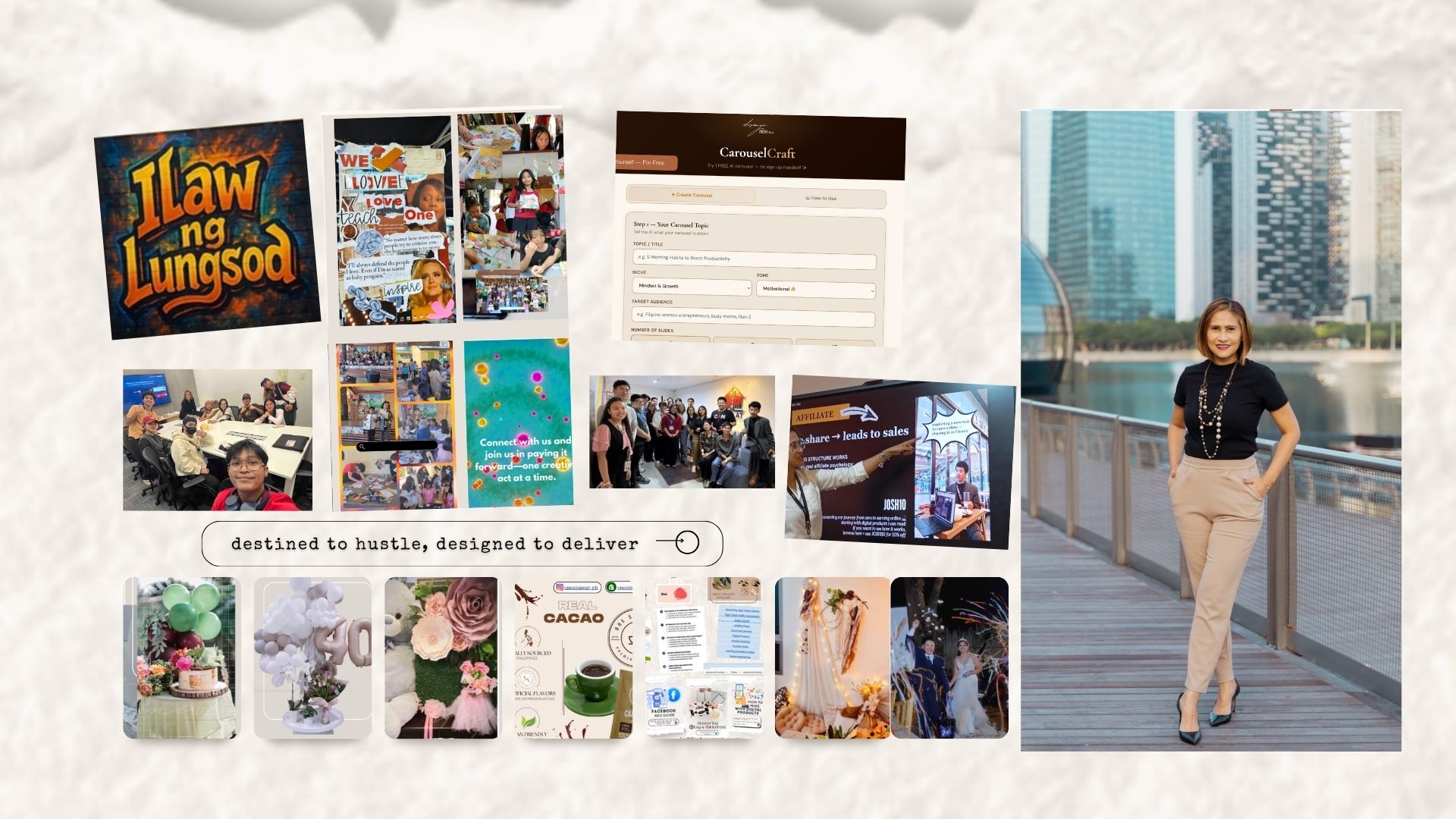
Jennifer Fuentes Castro of Destine Events and Disenyo Digitals started with a single creative gathering during a transition period after working overseas. What grew from it is a creative and digital solutions platform now working with LGUs, training young creatives, and building the kind of regional creative economy that Northern Luzon has always had the talent for but not always the infrastructure to support.
 Featured Partner
Inv8 Studio
Innovation Partner for Startups & Growing Businesses
She was just passing through.
After working overseas, Jennifer Fuentes Castro was in the Philippines with no immediate plan to launch anything locally. What changed that was not a business insight or a market gap analysis. It was family, friends, and a nudge to organize something small: a community-driven creative event that, by her own account, she did not expect to amount to much.
It brought together students, young creatives, and aspiring entrepreneurs. It showed her what collaboration, storytelling, and creative work could do inside a region that had all the raw material but not always the platforms to activate it. That first event did not just prove a concept. It changed the plan entirely.
From that gathering grew Destine Events, then Disenyo Digitals: a creative and digital solutions platform built around the belief that the talent gap in Northern Luzon is not a talent problem. It is an opportunity problem.
The Problem She Is Solving
Small businesses in the region have ideas. Young creatives have skill. What they often lack is the bridge between raw capability and market-ready execution: the branding, the digital marketing, the storytelling infrastructure, and the real-world exposure that turns potential into something a business can actually use or a creative can actually build a career on.
"Many small businesses and young creatives in the region have strong ideas and talent but lack access to digital marketing support, branding, storytelling, and real-world creative opportunities," Jennifer says. "At the same time, aspiring creatives often struggle to gain practical experience and exposure in the industry."
That dual gap is exactly what Disenyo Digitals is positioned to close. Businesses get creative and digital services. The young creatives delivering those services get the real-world exposure that no classroom can replicate. The model makes both sides better by connecting them.
What She Has Built
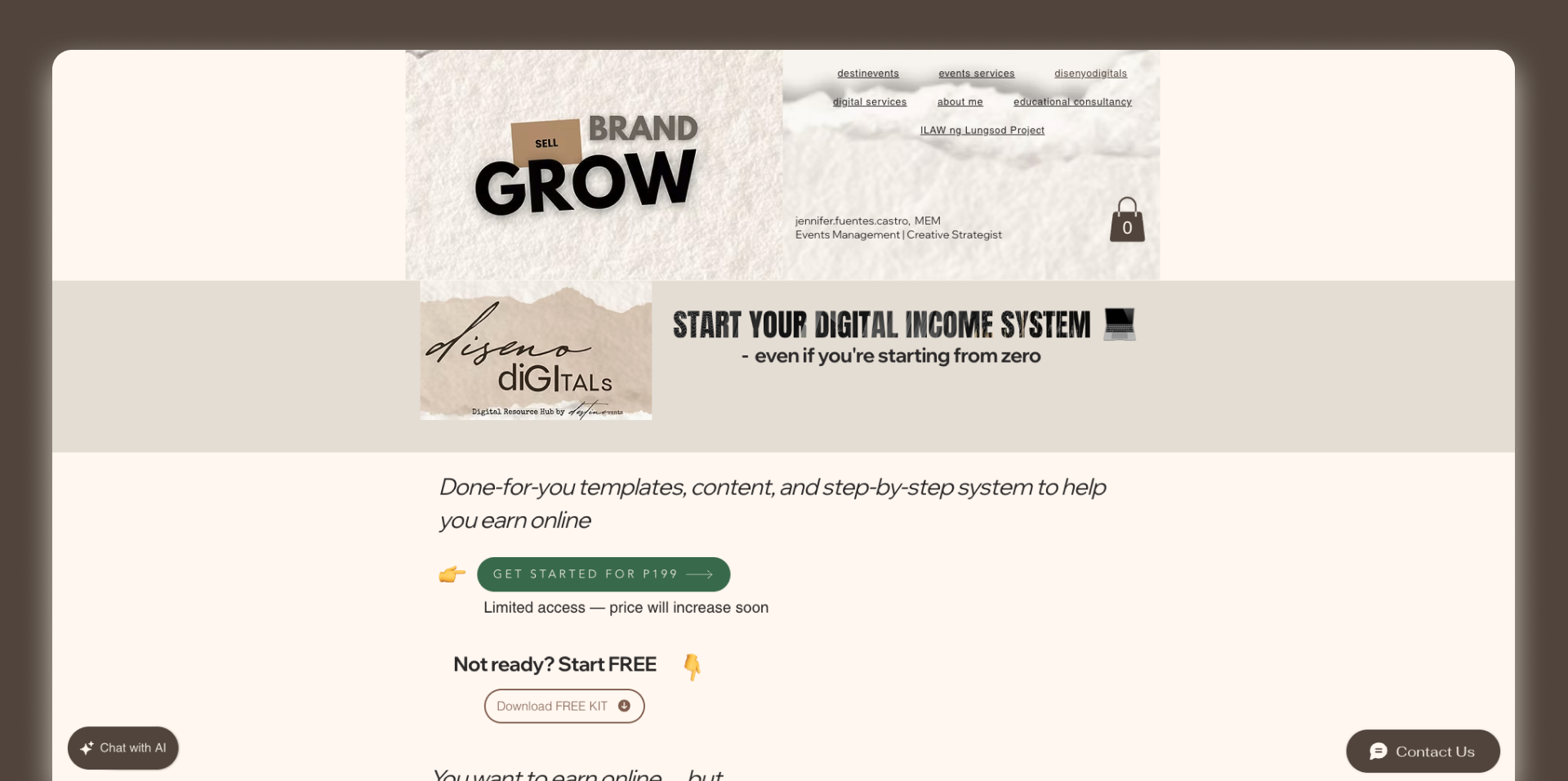
Disenyo Digitals operates as a creative and digital solutions platform covering branding, digital marketing, content creation, storytelling, and online growth support for businesses and startups. Through Destine Events, the team has built a parallel track focused on event production and on-ground storytelling, providing interns with practical, hands-on experience in live creative work.
Early recognition came from an unexpected direction. In the startup's early phase, Disenyo Digitals placed 2nd in a DOST startup challenge — an external validation that the combination of creativity, digital innovation, and community impact was not just a passion project but a viable enterprise direction. The DTI has since invited the team to showcase their digital services, opening further doors for ecosystem collaboration and institutional partnership.
The most significant recent development is the expansion into LGU collaboration: community-based projects that combine events, storytelling, and digital media to support local programmes and government initiatives. For a creative startup in its early stage, LGU partnerships are both a revenue anchor and a proof of reach. They demonstrate that the platform can deliver at a scale and accountability level that institutional clients demand.
The Part That Is Actually Hard
Building sustainably while working on community-driven projects is not a solved problem. Community work requires time, coordination, and consistency, three things that are genuinely difficult to maintain in a startup where resources are limited and the pipeline is still being built.
"Balancing opportunities, resources, and long-term growth has been a learning process," Jennifer says, "especially in the early stages of building something that is both creative and impact-driven."
Creative startups often underestimate the operational complexity of impact-driven work. The events do not run themselves. The internship programme requires structure to be genuinely useful rather than just nominally available. The LGU projects require delivery at a standard that builds the next contract, not just completes the current one. Each of these demands a different kind of capacity than pure creative work, and building that capacity while still doing the creative work is the real daily challenge.
What Keeps Her Going
"Seeing young creatives gain real experience, confidence, and exposure through our projects keeps us going."
That is not a polished mission statement. It is the honest answer of a founder who started with a community event and has not lost sight of what made it matter. The region has untapped creative talent across Baguio, the Cordillera, and Northern Luzon's provinces, and most of it will stay untapped unless there are platforms that offer something between formal employment and a blank page. Disenyo Digitals is trying to be that platform: structured enough to deliver, open enough to grow the people inside it.
Jennifer is also building something beyond the business itself. For anyone who wants to be part of the community assistance work that Destine Events and Disenyo Digitals are developing, she has opened a direct pathway in.

What She Is Building Toward
The next 6 to 12 months are focused on expanding digital services, strengthening the internship and creative learning programmes, and integrating AI-driven creative solutions into the platform's offering. More partnerships with businesses, LGUs, and community organizations are on the horizon, each one a new context in which the Disenyo Digitals model gets tested and refined.
Her advice to every founder in the region who is waiting for the right moment is the same advice she gave herself when she was just passing through with no plan:
"Start before it's perfect. Build with what you have, not what you wish you had. Stay close to your community, stay open to collaboration, and focus on creating real value, not just visibility. Most meaningful startups don't start with certainty. They start with courage, small steps, and consistency. You don't need ideal conditions. Just keep showing up and building momentum."
At Destine Events and Disenyo Digitals, they live by a line that captures it simply: destined to hustle, designed to deliver.
Find Disenyo Digitals and Destine Events:
Email: jenncastro@destinevents.biz | Join the community and help build assistance: forms.gle/vfr6ViGJJeJqAdZGA | For digital services, creative collaboration, LGU partnerships, or internship opportunities, reach out directly.
What Builders Can Learn From Jennifer Castro
Lesson 1 — The best starting point is the one right in front of you.
Jennifer did not start with a business plan or a market sizing exercise. She started with a room full of students and young creatives who showed up because someone bothered to organize something for them. That first event was not a product. It was a signal — proof that the demand existed, that the community was there, and that something more structured was worth building. The insight did not come from research. It came from showing up, running the experiment, and paying attention to what happened. Most founders wait for certainty before they act. Jennifer acted and let the response tell her what to build next.
The lesson: Your first initiative does not need to be your final product. It needs to be small enough to run, real enough to generate a response, and honest enough to tell you whether there is something worth building on top of it.
Lesson 2 — Community is not your marketing strategy. It is your product.
Most startups treat community as a growth channel — something you build after the product ships to help distribute it. Jennifer built the community first and let it shape what the product became. Destine Events was not a lead generation tool for Disenyo Digitals. It was the proof of concept. The young creatives who came through the events became the interns. The interns became the delivery mechanism for client services. The client services funded more events. Each layer reinforced the next because the community was not separate from the business — it was the business. That kind of compounding only happens when the founder treats the people around them as the core asset, not the audience.
The lesson: If your business depends on a community, build the community with the same seriousness you build the product. The two are not separate workstreams. They are the same thing at different stages.
Lesson 3 — Constraints are a design brief, not a reason to wait.
Jennifer launched with no external funding, no large team, and no guarantee that LGUs or institutional clients would come. She used what she had: creative skills, a network of young people who needed opportunities, and the willingness to deliver at a standard that earned the next contract. The DOST recognition and the DTI invitation did not come before she built something. They came because she built something first and made it visible. That sequence matters. Founders who wait for validation before building rarely get it. Founders who build something real, in public, with the resources available to them, tend to attract the validation they were waiting for.
The lesson: Do not treat your current constraints as conditions that need to be solved before you start. Treat them as the parameters of your first version. Build within them, deliver well, and let the results open the next door.
Are you a founder, innovator, or community builder in Northern Luzon?
We're always looking for compelling stories from the region's ecosystem. Whether you're launching a startup, running a program, or doing something interesting — we'd love to feature you.