
Isabela Pushes Digital Transformation to Create Jobs, Innovation, and Stronger Local Industries
Isabela is strengthening its digital ecosystem through a multi-stakeholder initiative connecting government, academe, industry, and the private sector. The two-day TRAIN Isabela 2026 focused on digital careers, emerging technologies, innovation, and opportunities to help local communities and industries participate in the digital economy.
 Featured Partner
Inv8 Studio
Innovation Partner for Startups & Growing Businesses
Building a Province-Ready Digital Ecosystem
The Provincial Government of Isabela is taking steps to ensure that digital transformation translates into more than technology adoption.
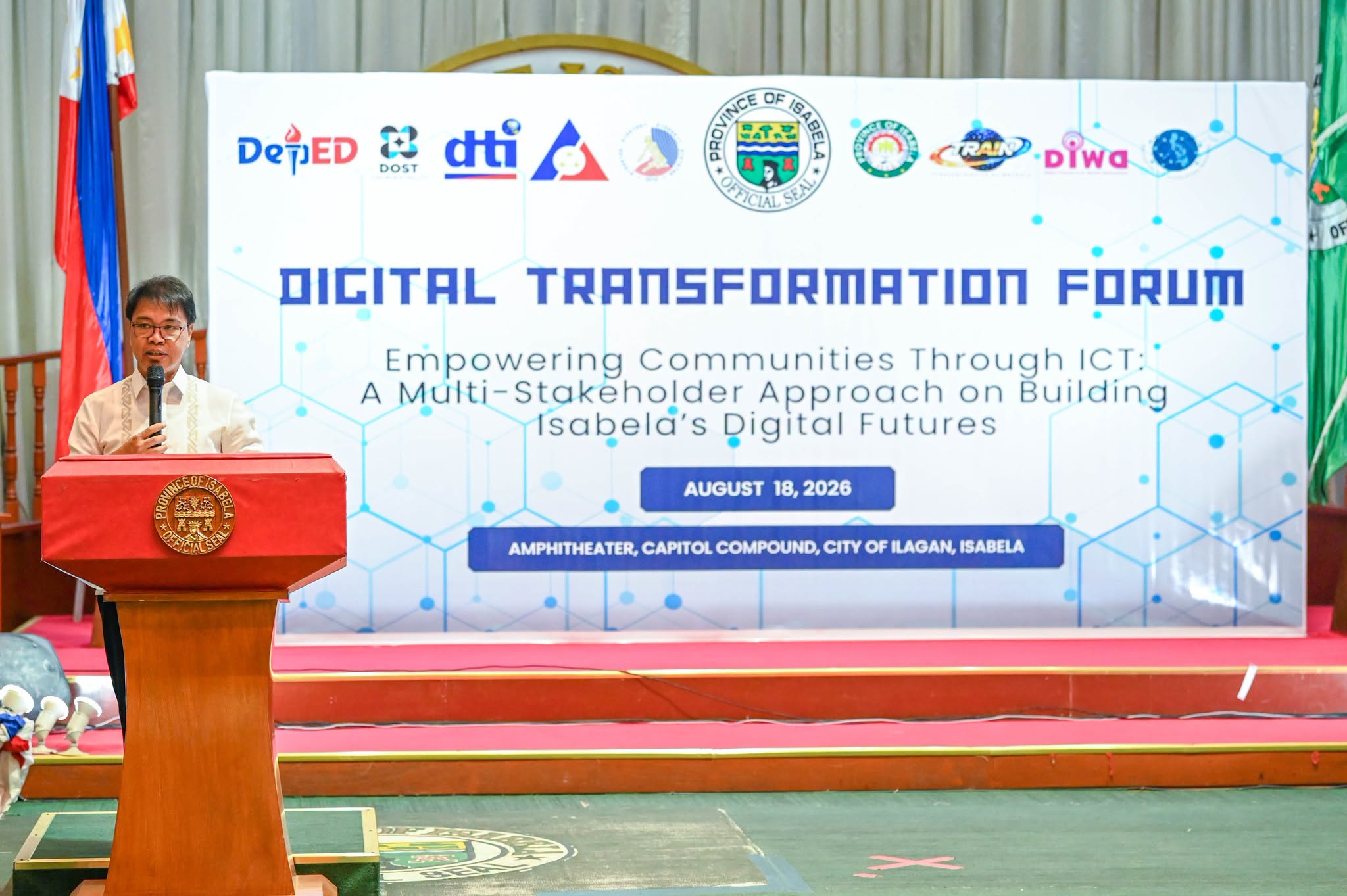
Through the Public Employment Service Office (PESO)–Isabela, the province brought together stakeholders from government, academe, industry, and the private sector during the Transformative AI Network (TRAIN) Isabela 2026, held on August 18–19, 2026, at the Provincial Capitol.
Anchored on the theme “Empowering Communities through ICT: A Multi-Stakeholder Approach on Building Isabela’s Digital Futures,” the initiative explored how digital transformation can create opportunities for workers, students, businesses, communities, and local governments.
The approach reflects a growing understanding that digital transformation is ultimately about people and institutions, not technology alone.
From Digital Access to Economic Opportunity
Digital transformation can create new opportunities for employment, entrepreneurship, innovation, and local industry development.
But access to technology by itself does not guarantee these outcomes.
Communities also need the skills to use technology productively.
Businesses need the capability to adopt digital tools.
Students need pathways into emerging digital careers.
Local governments need the capacity to use technology to improve services.
And entrepreneurs need opportunities to develop solutions around emerging market needs.
This is why initiatives that bring different sectors together can be important to building a local digital ecosystem.
Day One: Connecting Stakeholders Around Digital Transformation
The first day of TRAIN Isabela 2026 featured a Digital Transformation Forum, bringing together stakeholders from the academe, government, private sector, and industry.
The orientation and workshop were facilitated by Atty. Jocelle B. Sigue, Convenor of the Philippine ICT Innovation Network, with expert speakers sharing perspectives on digital transformation and the evolving ICT landscape.
The forum provided a space for stakeholders to examine the opportunities and challenges associated with the province’s digital future.
For local ecosystems, these conversations can help identify where technology can have the greatest practical impact.
Rather than adopting technology simply because it is new, communities can focus on identifying specific problems where digital solutions can improve outcomes.
Day Two: Connecting Students With the Digital Economy
The second day featured the Isabela DigiWork Expo, which connected ICT students and teachers from public and private universities and higher education institutions with industry experts.
Discussions focused on:
Emerging technologies
Digital careers
Industry trends
In-demand skills
Employment opportunities
This connection between education and industry is particularly important as technology continues to change the skills required across different sectors.
Students entering the workforce today may encounter roles and technologies that were not common when their academic programs began.
Industry engagement can help students understand where demand is heading and what capabilities they need to develop.
Preparing Talent for Emerging Opportunities
Digital transformation also changes the meaning of workforce competitiveness.
Technical knowledge remains important, but workers increasingly need to develop the ability to learn continuously, work with digital tools, solve problems, and adapt to new technologies.
For Isabela, strengthening these capabilities could help local talent participate in opportunities beyond traditional employment pathways.
Digital work can potentially connect people in regional communities to companies and markets outside their immediate geography.
This creates opportunities not only for employment but also for freelancing, digital entrepreneurship, creative industries, and technology-enabled businesses.
Digital Transformation and Local Industries
The initiative also highlights the potential of digital transformation to strengthen existing local industries.
Digital tools can support businesses in areas such as marketing, operations, customer engagement, data management, product development, and market access.
For MSMEs, the challenge is often not whether technology exists but whether they can identify the right technology for their needs and adopt it effectively.
This creates an important role for ecosystem organizations, industry groups, universities, and government agencies in helping businesses understand and implement appropriate digital solutions.
Exploring Isabela’s Creative Economy
Provincial Administrator Atty. Christopher A. Mamauag also highlighted the province’s plans to advance its creative industries.
The focus is timely as digital technologies continue to reshape creative work, content production, design, media, entertainment, and digital commerce.
For Isabela, developing the creative economy could create new opportunities for young people and local businesses while providing another pathway for the province to participate in the broader digital economy.
Creative industries also demonstrate that digital transformation is not limited to information technology companies.
Designers, creators, marketers, filmmakers, artists, developers, entrepreneurs, and other professionals can all participate in technology-enabled economic activity.
Innovation Requires Collaboration
A key feature of TRAIN Isabela 2026 was its multi-stakeholder approach.
The initiative brought together government, academe, industry, and other sectors rather than treating digital transformation as the responsibility of a single institution.
This matters because no single stakeholder controls all the resources required to build a digital ecosystem.
Universities develop talent and research.
Government provides policy, infrastructure, and public programs.
Industry understands market demand.
Entrepreneurs develop and test new solutions.
Communities provide the real-world problems that need to be addressed.
Connecting these capabilities can create stronger pathways for innovation.
Collaboration and Innovation Ecosystems Across Isabela
Beyond the provincial-level activities, a province-wide Collaboration and Innovation Ecosystems activity was also conducted in Ilagan, Cauayan, Echague, and Santiago.
The activities featured LGU innovation initiatives, ICT Council dialogues, and innovation roundtables.
Taking the conversation beyond the provincial capital is significant.
A digital ecosystem cannot be built in one location alone.
Different cities and municipalities have different industries, capabilities, challenges, and opportunities.
Creating connections between these local ecosystems can help the province develop a more distributed approach to digital transformation and innovation.
What This Means for Isabela’s Startup Ecosystem
A stronger digital ecosystem can also create conditions for entrepreneurship.
As students gain new skills, businesses adopt new technologies, and government identifies new challenges, opportunities emerge for entrepreneurs to build solutions.
The pathway can look something like:
Local Problem → Digital Solution → Prototype → Validation → Startup → Market
For this to happen, however, innovators need more than ideas.
They need access to mentors, technical expertise, users, funding, incubation, industry partners, and markets.
This is where digital transformation initiatives can intersect with the broader innovation ecosystem.
The problems identified by communities and industries can become potential opportunities for researchers, students, startups, and entrepreneurs to work on.
The Bigger Opportunity Is Ecosystem Building
Digital transformation is often measured through infrastructure, connectivity, platforms, or technology adoption.
But the longer-term opportunity is broader.
Can local talent find meaningful digital careers?
Can MSMEs become more competitive?
Can entrepreneurs build technology-enabled businesses?
Can universities produce skills aligned with industry needs?
Can local governments become more capable users of technology?
Can innovation happen outside major urban centers?
These are ecosystem questions.
TRAIN Isabela 2026 provides one example of bringing different stakeholders into the same conversation around these challenges.
From Digital Transformation to Digital Development
For Isabela, the next challenge is translating conversations and workshops into sustained action.
That could mean stronger industry-academe partnerships, better pathways for digital careers, more technology adoption among local enterprises, stronger support for innovators, and continued collaboration among LGUs and ICT stakeholders.
Digital transformation becomes meaningful when it improves people’s ability to participate in economic opportunities.
For a province like Isabela, that means ensuring that technology becomes a tool for jobs, entrepreneurship, innovation, and inclusive local development.
The opportunity is not simply to become more digital.
It is to become more capable because of digital transformation.
Original Source
Market Context
For Northern Luzon, digital transformation can become an important driver of regional competitiveness when it connects infrastructure and technology with talent, entrepreneurship, industry demand, and innovation.
Isabela’s approach is notable for bringing together government, academe, industry, and local communities while addressing both workforce development and local economic opportunities.
The larger opportunity is to build pathways where digital skills lead to employment, local businesses adopt technology, and community challenges become opportunities for innovators and entrepreneurs to develop solutions.
Are you a founder, innovator, or community builder in Northern Luzon?
We're always looking for compelling stories from the region's ecosystem. Whether you're launching a startup, running a program, or doing something interesting — we'd love to feature you.