
DOST Ilocos Norte Launches Innovation Hub to Advance Circular Economy and Smart Agriculture
The new Innovation Hub showcases technologies that transform agricultural waste into higher-value products, highlighting how innovation can create new livelihood opportunities while promoting more sustainable farming practices.
 Featured
Amianan Ventures
A New Innovation Hub Demonstrates How Sustainability Can Create Economic Value
The Department of Science and Technology Ilocos Norte officially launched its Innovation Hub for Circular Economy and Smart Agriculture on July 3, 2026, establishing a new space where technology, research, and local innovation converge to support more sustainable agricultural development in the province.
The facility is designed as a venue for technology demonstrations, educational activities, and innovation programs that promote smart agriculture, efficient resource management, and circular economy practices. By providing a platform where communities, researchers, students, and entrepreneurs can engage with emerging technologies, the Innovation Hub aims to encourage solutions that improve agricultural productivity while reducing environmental impact.
Agricultural Waste Can Become the Foundation for New Rural Enterprises
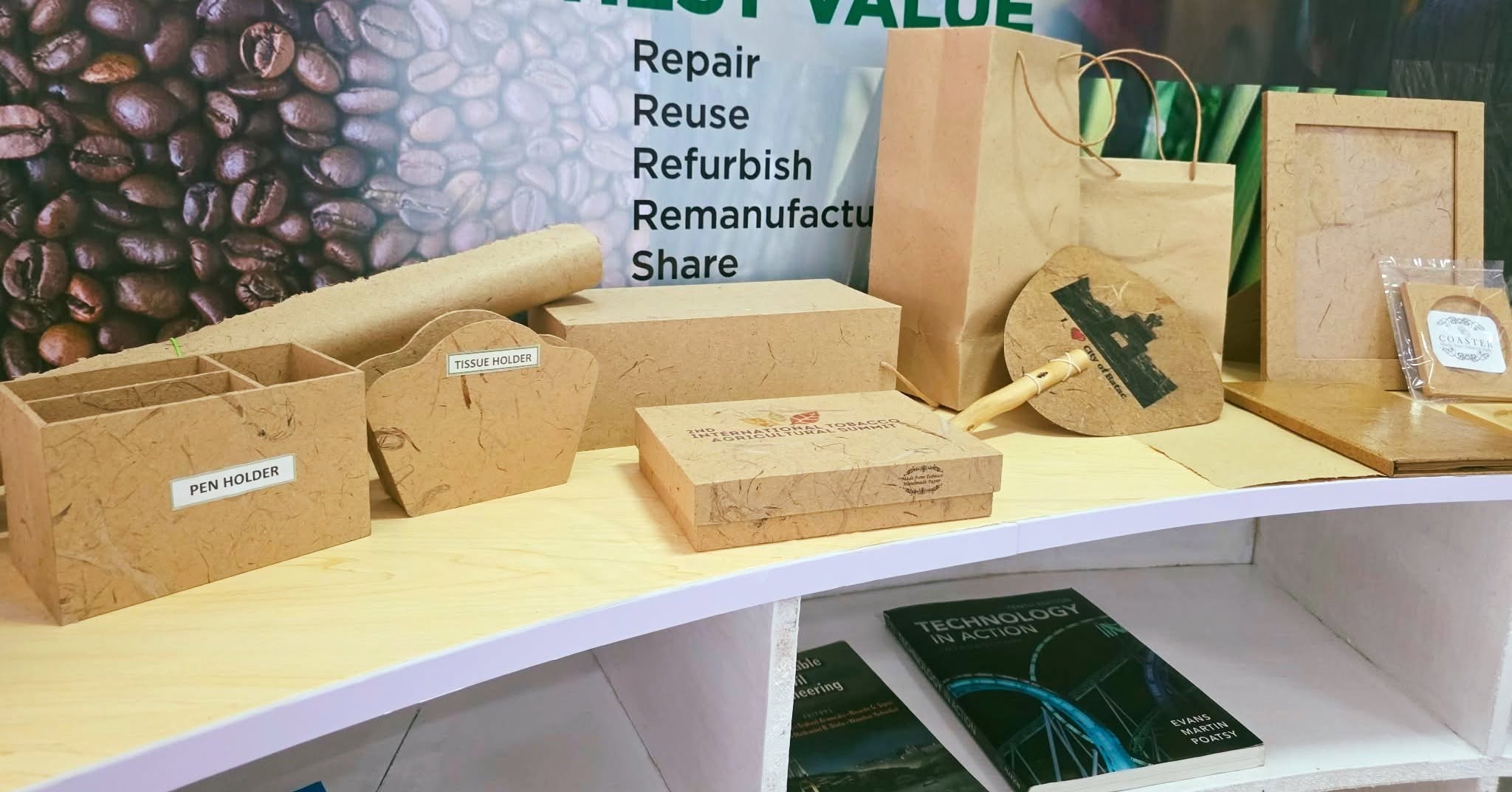
Among the featured innovations during the launch were handmade paper products developed from tobacco stalks by the National Tobacco Administration.
Traditionally treated as agricultural waste after harvest, tobacco stalks were transformed into handmade paper and novelty products, demonstrating how farm by-products can be converted into commercially valuable goods. The initiative illustrates one of the core principles of the circular economy, extending the value of existing resources instead of disposing of them after a single use.
Beyond reducing agricultural waste, the innovation creates opportunities for farmers and local communities to diversify their income through value-added products while making more efficient use of available resources.

Circular Economy Encourages Entrepreneurs to Rethink Waste as a Business Opportunity
The circular economy is gaining attention worldwide as industries search for more sustainable production models that reduce waste while creating new economic opportunities. Rather than following the traditional “produce, use, and dispose” approach, circular systems aim to keep materials in productive use for as long as possible through reuse, recycling, and value-added processing.
The tobacco handmade paper initiative demonstrates how this principle can be applied within Northern Luzon’s agricultural sector. By transforming crop residues into marketable products, local innovators can reduce waste management challenges while developing new enterprises that complement existing farming activities.
For entrepreneurs, the lesson extends beyond tobacco. Agricultural by-products from rice, corn, coffee, coconut, and other crops may also present opportunities for innovation when paired with research, product development, and market demand.
Innovation Hubs Bridge Research, Technology, and Community Development
Facilities like the DOST Ilocos Norte Innovation Hub play an important role in making innovation more accessible beyond research institutions. They provide communities with opportunities to experience emerging technologies firsthand while encouraging collaboration among government agencies, researchers, entrepreneurs, and industry partners.
By combining technology demonstrations with educational programs and local innovations, the hub helps create an environment where scientific research can be translated into practical applications that benefit communities and support enterprise development.
As climate change, resource efficiency, and food security become increasingly important, innovation spaces like these can help accelerate the adoption of technologies that make agriculture more resilient and sustainable.
What This Means for Northern Luzon’s Innovation Ecosystem
Northern Luzon has long been recognized for its agricultural productivity, but the region’s next opportunity lies in creating more value from what it already produces. Innovation is no longer limited to increasing crop yields. It also includes finding new uses for agricultural by-products, reducing waste, and developing businesses that strengthen local value chains.
The launch of DOST Ilocos Norte’s Innovation Hub reflects a broader shift toward innovation that combines sustainability with entrepreneurship. As more research institutions and government agencies invest in circular economy initiatives, entrepreneurs will have greater opportunities to develop products and services that generate economic value while addressing environmental challenges.
For founders and MSMEs working in agritech, food innovation, and manufacturing, agricultural waste should no longer be viewed simply as a disposal problem. Increasingly, it represents a resource that can be transformed into new products, new enterprises, and new markets.
The Innovation Hub marks another step in strengthening Northern Luzon’s innovation infrastructure, providing a space where research can inspire enterprise and where sustainable ideas have the opportunity to become commercially viable solutions.
Original Source
Market Context
The circular economy has become a growing priority globally as governments and industries seek to reduce waste while improving resource efficiency. In agriculture, converting crop residues into higher-value products can generate additional income streams, reduce environmental impacts, and strengthen rural enterprises. For Northern Luzon, where agriculture remains a major economic sector, innovations that transform farm by-products into commercially viable products offer new opportunities for MSMEs, cooperatives, and technology-based startups working in sustainable manufacturing and agritech.
Are you a founder, innovator, or community builder in Northern Luzon?
We're always looking for compelling stories from the region's ecosystem. Whether you're launching a startup, running a program, or doing something interesting — we'd love to feature you.