
Apayao Just Launched an Electric Mobility System Built by Filipino Scientists. MOVE Apayao Is the Cordillera's First Step Toward Smart, Clean Transport.
DOST-CAR formally launched the MOVE Apayao Project and its CHaRM-enabled charging station facility at Apayao State College on May 18, 2026, deploying a locally developed smart mobility system featuring electric jeepneys, a mobile application, and 30-minute fast charging technology developed by UP Diliman scientists, with plans for expansion across the Cordillera region.
 Featured Partner
Inv8 Studio
Innovation Partner for Startups & Growing Businesses
Apayao is a UNESCO Biosphere Reserve. It is also a province where fuel costs are high, transport options are limited, mountainous terrain makes logistics difficult, and the communities that need reliable mobility the most are often the furthest from it. On May 18, 2026, at Apayao State College, DOST-CAR and its partners launched a response built from Filipino science, local partnership, and a conviction that the countryside does not have to wait for smart transport solutions to arrive from somewhere else.
MOVE Apayao, which stands for Smart Mobility for Viable, Efficient, and Cleaner Mode of Transportation, is now operational. A charging station is running. An e-jeepney is moving. And a multi-agency partnership that spans national government, local government, academe, and the private sector has committed to building a transport model that Apayao, and eventually the wider Cordillera, can use as a foundation for long-term electric mobility.
What MOVE Apayao Is and How It Works
The project deploys a locally developed smart mobility system built around three integrated components: electric vehicles, a mobile application for service optimization, and charging infrastructure that makes the entire system viable for daily public transport use.
At the center of the charging infrastructure is CHaRM technology, which stands for Charging in Minutes, developed by Filipino scientists from the University of the Philippines Diliman through DOST-supported research. The system allows electric vehicles to charge in as fast as 30 minutes, a critical operational threshold for public transport. Faster charging means more trips per day, lower downtime, and a commercially viable shift to electric mobility for drivers and operators who cannot afford to have their vehicles off the road for hours at a time.
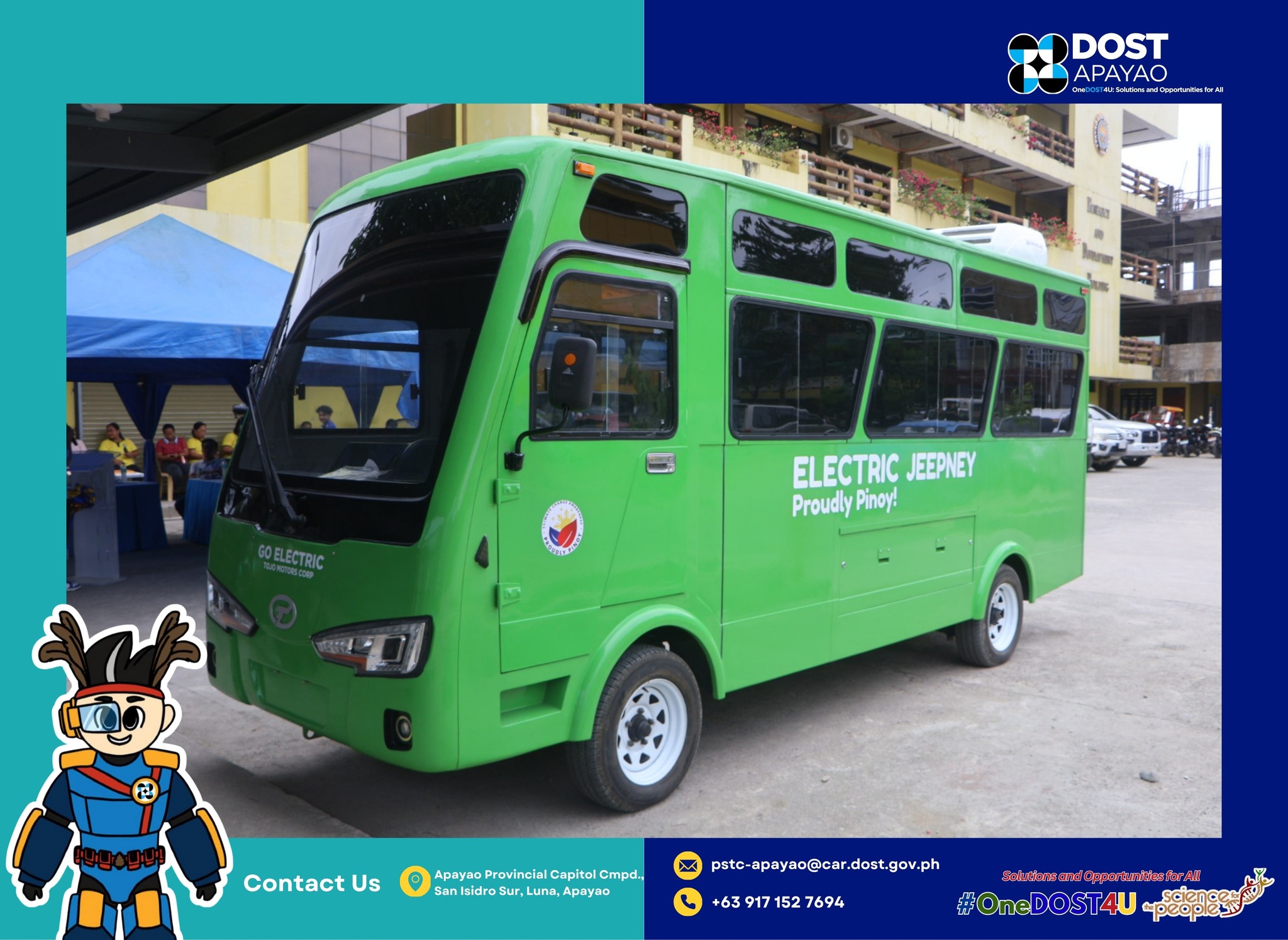
The initial vehicle fleet includes a TOJO e-jeepney demonstrated at the launch, with e-trikes, c-trikes, and additional e-jeepneys planned as part of a broader rollout. The optimized service loop is designed for tourism and school services, two of the most consistent and predictable transport demand streams in a predominantly rural province like Apayao.
The charging station facility was established at Apayao State College through ASC's counterpart support, positioning the province's state university as the physical anchor of the e-mobility ecosystem rather than just a passive observer of its development.

The Partnership That Made It Possible
MOVE Apayao's launch brought together a cross-sector coalition that reflects the project's design philosophy: no single institution can build countryside transport innovation alone.
DOST provided the technology backbone, funding, and technical expertise. DOTr-CAR contributed transport policy alignment and regulatory coordination, with the two agencies having met at the DOST-CAR Regional Office in La Trinidad as early as March 23, 2026 to formalize their collaboration. The Provincial Government of Apayao, the Lone District of Apayao, the Sangguniang Panlalawigan, and the municipalities of Luna, Pudtol, and Santa Marcela all sent representatives and expressed support. Apayao State College hosted the charging infrastructure and serves as the project's institutional base.
DOST Assistant Secretary for Countryside Development Engr. Maria Teresa B. De Guzman framed the stakes clearly. "Doing nothing is no longer an option," she said, pointing to rising fuel costs, supply uncertainties, and environmental pressures as realities that rural transport planning can no longer defer. "What we are launching today is not just a facility. It is a commitment."
DOST-CAR Regional Director Dr. Nancy A. Bantog connected the project to the broader ecosystem it is building. "The e-jeepney represents progress in motion," she said, noting that the charging facility and CHaRM-enabled system demonstrate that electric mobility is no longer theoretical for Apayao. It is something communities can use today.
Why Apayao First
The choice of Apayao as the pilot province for MOVE Apayao is grounded in both challenge and opportunity. As a UNESCO Biosphere Reserve, Apayao carries an environmental stewardship mandate that makes the transition to clean transport not just economically sensible but institutionally aligned with the province's identity and obligations.
At the same time, Apayao's remoteness and mountainous terrain make it exactly the kind of environment where smart mobility solutions need to prove themselves if they are to be taken seriously as a model for rural and highland communities across the Philippines. If an optimized electric mobility system can work in Apayao, it can work in most of the Cordillera.
That replicability was already on the table during the March 23 DOST-CAR and DOTr-CAR collaboration meeting, where both agencies discussed the potential for expanding the system across the Cordillera region beyond its initial Apayao implementation. The launch on May 18 is the beginning of that broader ambition, not its endpoint.
What Comes Next
Assistant Secretary De Guzman was direct about how MOVE Apayao's success will be measured: not by the number of charging stations built or vehicles deployed, but by whether the system is used, whether it improves livelihoods, and whether communities feel its benefits.
She called on local governments to integrate the initiative into long-term development plans, transport operators to embrace the shift toward electric vehicles, and partners to continue scaling solutions that are both sustainable and inclusive.
"Let MOVE Apayao be more than a project," she said. "Let it be a signal that the countryside is ready, that the people are ready, and that the future has already begun."
For the Cordillera and Northern Luzon's innovation ecosystem, MOVE Apayao is a concrete demonstration that highland communities do not have to wait for clean, smart infrastructure to be designed for them in Manila. Filipino scientists built the charging technology. Local government provided the land and institutional support. DOST-CAR and DOTr-CAR provided the coordination. And Apayao is now running on electricity.
Are you a founder, innovator, or community builder in Northern Luzon?
We're always looking for compelling stories from the region's ecosystem. Whether you're launching a startup, running a program, or doing something interesting — we'd love to feature you.